

10 Modern Bedroom Ideas with Soft Cozy Layers
A modern bedroom can be sleek without feeling cold, and cozy without becoming visually cluttered. The secret is finding the right balance between clean lines and inviting layers—something that makes the room feel polished during the day and wonderfully comfortable at night.
Soft bedding, warm lighting, tactile fabrics, natural materials, and carefully chosen accents can completely change how a contemporary bedroom feels. You don’t need to fill every corner with decor or follow an expensive designer look. In fact, some of the most beautiful modern bedrooms rely on a surprisingly simple foundation: a restrained color palette, quality-looking textures, practical furniture, and a few details that make the room feel personal.
If your bedroom currently feels a little flat, stark, or unfinished, layering is one of the easiest ways to give it more depth. A linen duvet can soften a structured bed frame. A plush rug can warm up hard flooring. Layered pillows can make a minimalist bed feel more inviting, while warm bedside lighting can take the edge off an otherwise crisp color scheme.
In my experience, the best modern bedrooms aren’t necessarily the ones with the most expensive furniture. They’re the rooms where every element has a purpose and the textures work together naturally.
This collection explores ten approachable ways to create that look. You’ll find ideas for bedding, lighting, color, rugs, wood accents, upholstery, artwork, and styling details that work especially well in contemporary homes. Whether you’re decorating a spacious primary bedroom, refreshing a guest room, or working with a smaller space, these ideas can help you create a bedroom that feels modern, calm, layered, and genuinely comfortable.
Table of Contents
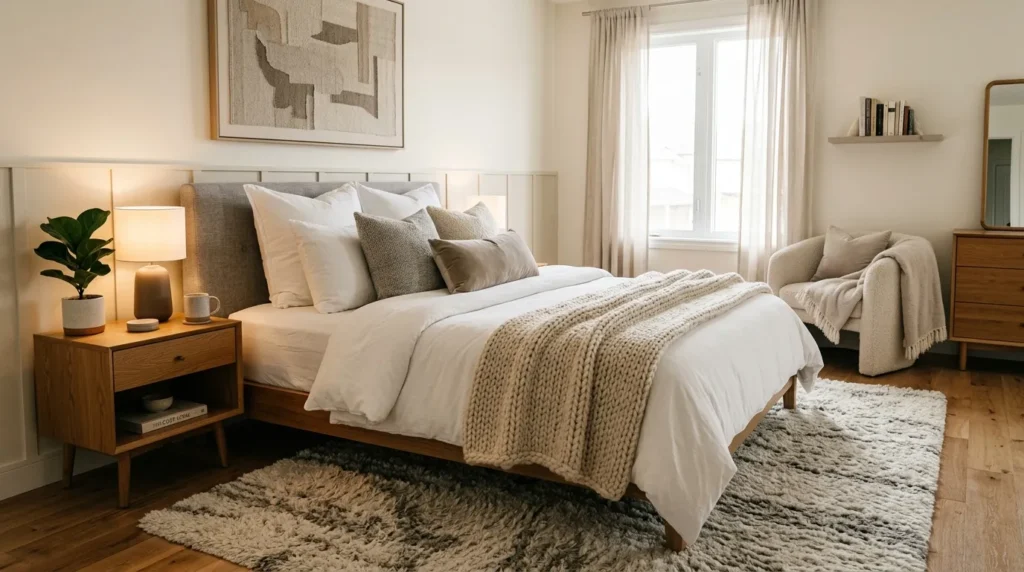
1. Layered Neutral Bedding
Create depth with a combination of soft neutrals, varied fabrics, and relaxed bedding.
2. Warm Wood Accents
Introduce natural wood to balance modern furniture and add organic warmth.
3. Plush Area Rugs
Use a comfortable rug to soften flooring and visually anchor the bed.
4. Soft Upholstered Headboard
Add cushioning and texture with a streamlined upholstered focal point.
5. Ambient Bedroom Lighting
Use warm, layered lighting to make a contemporary bedroom feel more inviting.
6. Textured Throw Pillows
Combine subtle patterns and tactile fabrics for a relaxed, finished bed.
7. Minimalist Wall Art
Give the walls personality while maintaining a clean modern aesthetic.
8. Cozy Window Layers
Use curtains and natural light to make the room feel softer and more private.
9. Organic Decorative Details
Bring in ceramics, greenery, woven materials, and other natural touches.
10. Calm Tonal Styling
Create a sophisticated retreat by layering different shades of one soothing color family.
1. Layered Neutral Bedding
Quick Benefits
- Creates instant softness
- Makes a modern bed feel inviting
- Adds visual depth without clutter
- Works with many decorating styles
- Easy to update seasonally
Why It Works
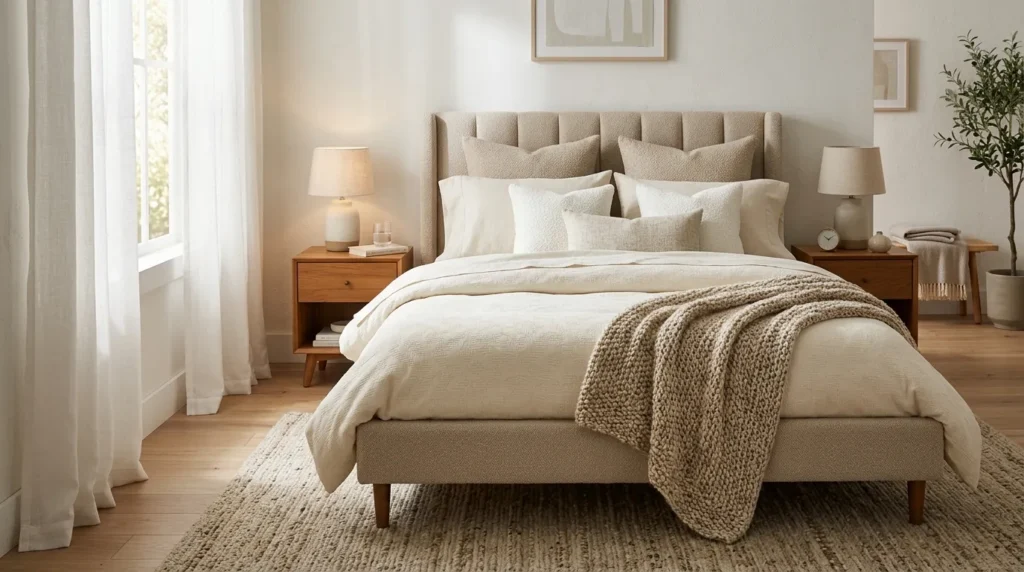
Neutral bedding is one of the simplest ways to make a contemporary bedroom feel warm without sacrificing its clean aesthetic. Instead of relying on bold colors, the interest comes from combining slightly different shades and textures. Think ivory sheets, a warm beige duvet, taupe pillows, and a chunky throw casually folded across the foot of the bed.
The beauty of this approach is that nothing needs to match perfectly. Slight tonal differences keep the bed from looking flat, while materials such as washed cotton, linen, boucle, velvet, or knitted fabric provide tactile contrast. This is especially useful in modern bedrooms where the furniture may have straight lines and smooth surfaces.
A layered bed also feels practical rather than purely decorative. You can remove a blanket when the room is warm or add another layer during cooler nights, making the styling work with everyday life.
How To Style It
Start with a simple fitted sheet and comfortable sleeping pillows. Add a duvet or comforter in ivory, cream, oatmeal, or soft beige. Fold a quilt or lightweight blanket near the bottom third of the bed to create another horizontal layer.
For pillows, keep the palette restrained but vary the textures. A pair of larger Euro pillows can sit behind standard sleeping pillows, followed by one or two decorative cushions. Finish with a casually draped throw rather than folding everything too perfectly.
If your bedroom has dark furniture, warmer cream and camel tones can create balance. For pale furniture, soft gray, stone, and oatmeal can provide subtle contrast. The goal is to create a bed that looks polished but still feels like you can climb into it at the end of the day.
2. Warm Wood Accents
Quick Benefits
- Adds natural warmth
- Softens crisp modern lines
- Works with neutral colors
- Creates visual balance
- Brings organic character indoors
Why It Works
Modern bedrooms can sometimes lean heavily toward smooth white surfaces, metal, glass, and cool gray finishes. While these materials can look sophisticated, too many hard surfaces may make the room feel impersonal. Warm wood provides an immediate counterbalance.
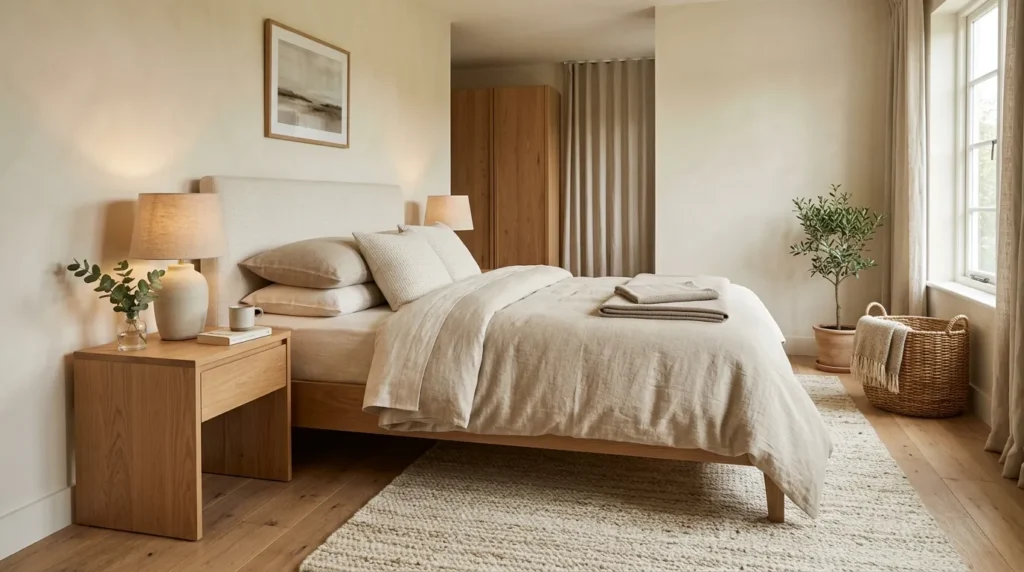
A wooden nightstand, oak bench, floating shelf, bed frame, or small accent table can introduce warmth without changing the entire room. Natural wood also pairs beautifully with soft bedding because the contrast between hard and soft materials makes both elements more noticeable.
The trick is choosing wood tones that support the rest of the palette. Light oak works particularly well with Scandinavian-inspired spaces, while walnut creates a richer and more sophisticated atmosphere. Medium natural wood can bridge the gap between cool modern finishes and warm textiles.
How To Style It
You don’t need several matching wooden pieces. One substantial wood element can be enough to introduce the organic quality you’re looking for.
Try a light oak nightstand beside a fabric-covered bed, or place a simple wooden bench at the foot of the bed. If the room already contains wood flooring, repeat that finish in smaller accents rather than introducing several unrelated tones.
Keep accessories on wooden furniture simple. A ceramic lamp, small vase, stack of books, or single piece of artwork can prevent the surface from becoming cluttered.
For a warmer look, combine wood with cream bedding, woven baskets, linen curtains, and soft beige upholstery. For a more contemporary effect, pair walnut or darker wood with charcoal, off-white, and muted gray.
3. Plush Area Rugs
Quick Benefits
- Makes hard flooring feel softer
- Anchors the bed visually
- Adds warmth underfoot
- Introduces texture
- Helps define the sleeping zone
Why It Works
A rug can completely change the atmosphere of a bedroom, especially when the flooring is hardwood, laminate, tile, or another hard surface. Stepping onto something soft in the morning is a small detail, but it contributes significantly to how comfortable the room feels.
In a modern bedroom, rugs also help prevent the design from becoming overly linear. The bed, nightstands, dresser, and architectural elements may all have defined edges. A plush rug introduces a softer shape and another layer of texture.
Neutral rugs are particularly versatile. Cream, oatmeal, warm gray, taupe, and subtle geometric patterns can add interest without competing with the bedding. A slightly distressed or handmade appearance can also give a contemporary room more character.
How To Style It
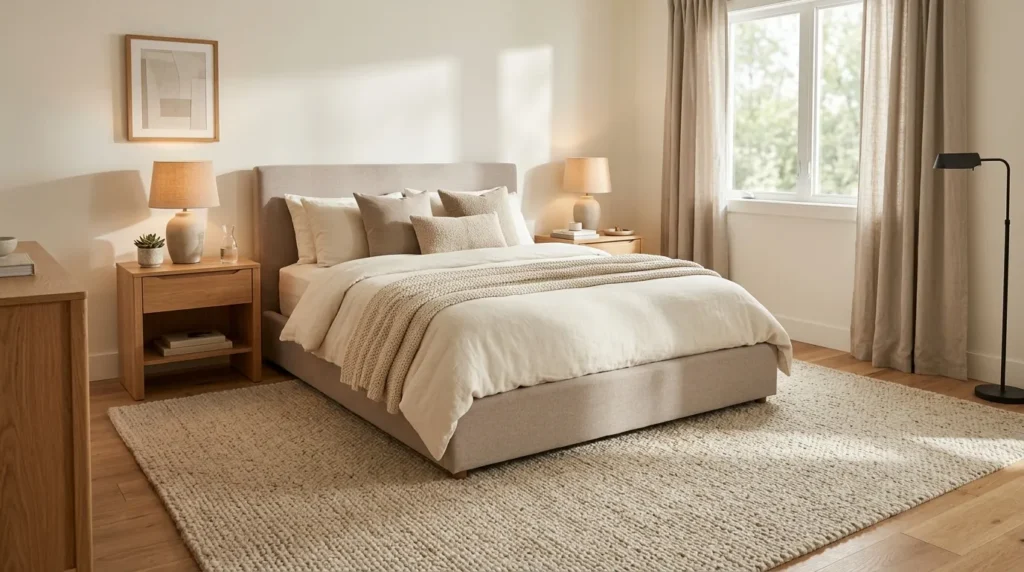
Whenever possible, choose a rug large enough to extend beyond the sides of the bed. Ideally, the bed should sit comfortably on the rug rather than appearing to float beside it.
For a queen bed, a generous area rug can extend several feet beyond each side and provide a soft landing area. In a smaller room, runners placed along the sides can create a similar effect without requiring a large rug.
Look for materials that feel comfortable underfoot, such as wool, cotton, or soft synthetic fibers. If you’re decorating a high-traffic bedroom or guest room, choose something durable and relatively easy to maintain.
A simple cream rug works beautifully with layered neutral bedding, while a muted geometric design can add structure to an otherwise tonal room.
4. Soft Upholstered Headboard
Quick Benefits
- Adds comfort
- Creates a strong focal point
- Softens modern furniture
- Provides visual height
- Works well in neutral palettes
Why It Works
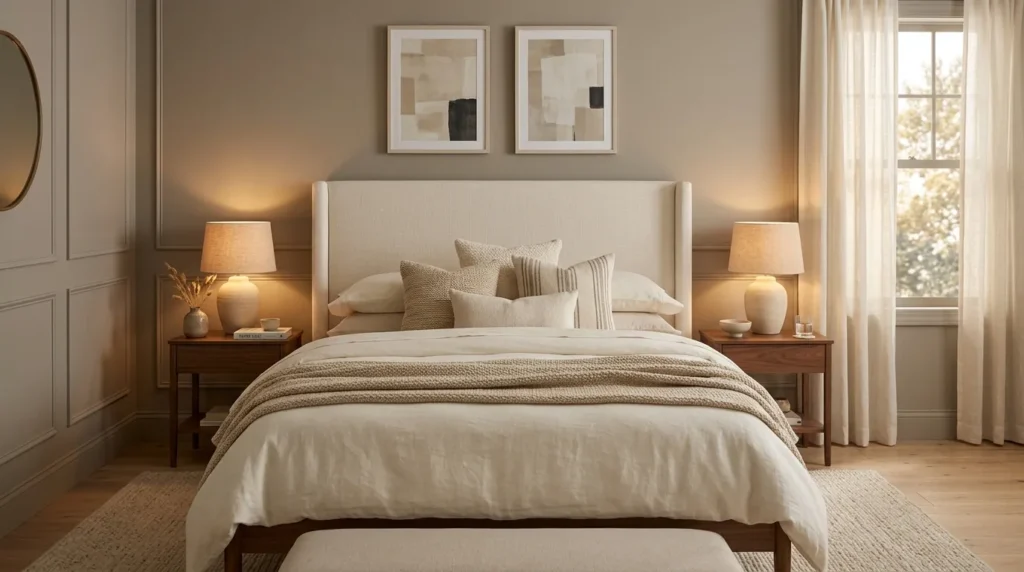
An upholstered headboard is an excellent way to make a modern bedroom feel more luxurious and comfortable at the same time. Fabric naturally introduces softness, and a large headboard can make the bed feel like the centerpiece of the room rather than simply another piece of furniture.
For a contemporary look, choose a headboard with a simple silhouette rather than an overly ornate shape. A wide rectangular design, gently curved profile, or softly padded panel can create an elegant focal point while maintaining modern simplicity.
Texture matters as much as color. Linen-look fabric, boucle, cotton, and soft performance upholstery can all add dimension. If the rest of the room is visually restrained, a textured headboard gives the eye something interesting to notice.
How To Style It
Keep the bedding slightly more relaxed than the headboard. This contrast creates a polished but comfortable appearance.
A cream or warm-gray upholstered headboard works with almost any neutral bedding palette. For a stronger statement, consider muted olive, dusty blue, warm taupe, or charcoal.
Pair the bed with streamlined nightstands and lamps so the headboard remains the primary feature. Avoid overcrowding the wall above it with too many decorations.
If you have a small bedroom, a tall upholstered headboard can visually emphasize the vertical space. Just keep surrounding furniture relatively simple so the room doesn’t feel crowded.
5. Ambient Bedroom Lighting
Quick Benefits
- Creates a relaxing atmosphere
- Makes textures more noticeable
- Adds warmth after sunset
- Improves nighttime functionality
- Enhances modern furniture
Why It Works
Lighting is one of the most overlooked elements in bedroom design. Even a beautifully decorated room can feel uncomfortable if the only light source is a bright ceiling fixture.
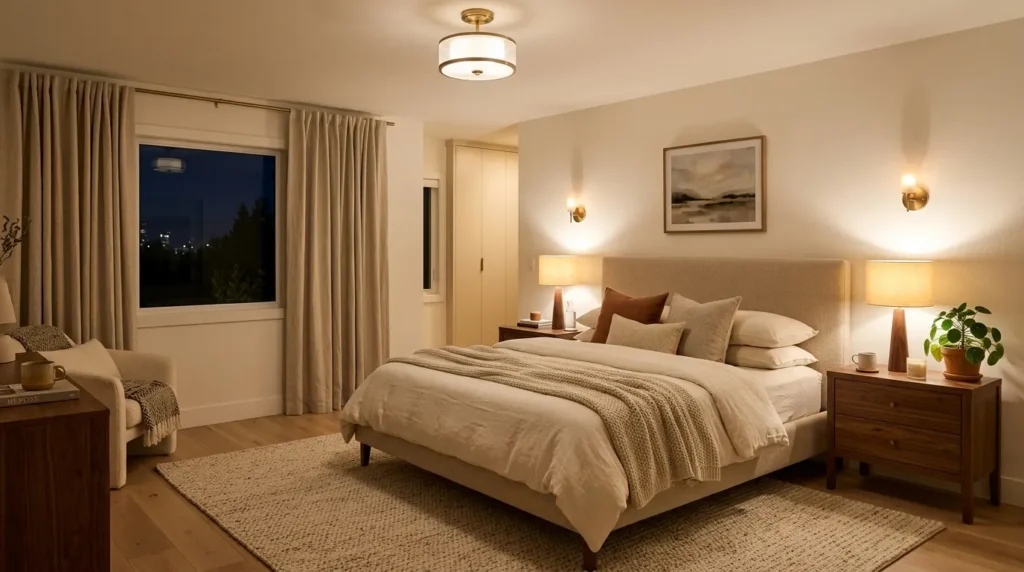
Modern bedrooms benefit from several smaller sources of illumination. Bedside lamps, wall sconces, floor lamps, and subtle accent lighting allow you to control the mood depending on what you’re doing.
Warm-toned bulbs are especially effective in a cozy bedroom because they complement cream, beige, wood, and natural textiles. Instead of illuminating the entire room equally, layered lighting creates pockets of warmth around the bed and other important areas.
I’ve noticed that bedrooms often feel much more sophisticated when the lighting is slightly softer in the evening. It allows the textures and materials to become part of the atmosphere rather than making everything appear flat and overly bright.
How To Style It
Begin with bedside lighting on both sides of the bed if the layout allows. Matching lamps create symmetry, while coordinating but different lamps can make the room feel more collected.
Wall sconces are excellent for smaller bedrooms because they free up space on the nightstands. A slim floor lamp can provide additional illumination near a reading chair or dresser.
Choose fixtures with finishes that connect to the rest of the room. Brushed brass can warm up a neutral bedroom, black metal adds contrast, and ceramic or linen shades bring additional texture.
Use dimmable lighting whenever possible. The ability to lower the brightness at night can make a bigger difference than adding another decorative object.
6. Textured Throw Pillows
Quick Benefits
- Adds visual dimension
- Makes the bed feel inviting
- Introduces subtle color
- Creates tactile interest
- Easy to change seasonally
Why It Works
Throw pillows are an easy place to introduce texture without committing to a major design change. In a modern bedroom, the key is restraint. Too many decorative pillows can make the bed look overly staged, while a carefully chosen selection creates that relaxed, layered appearance Pinterest readers love.
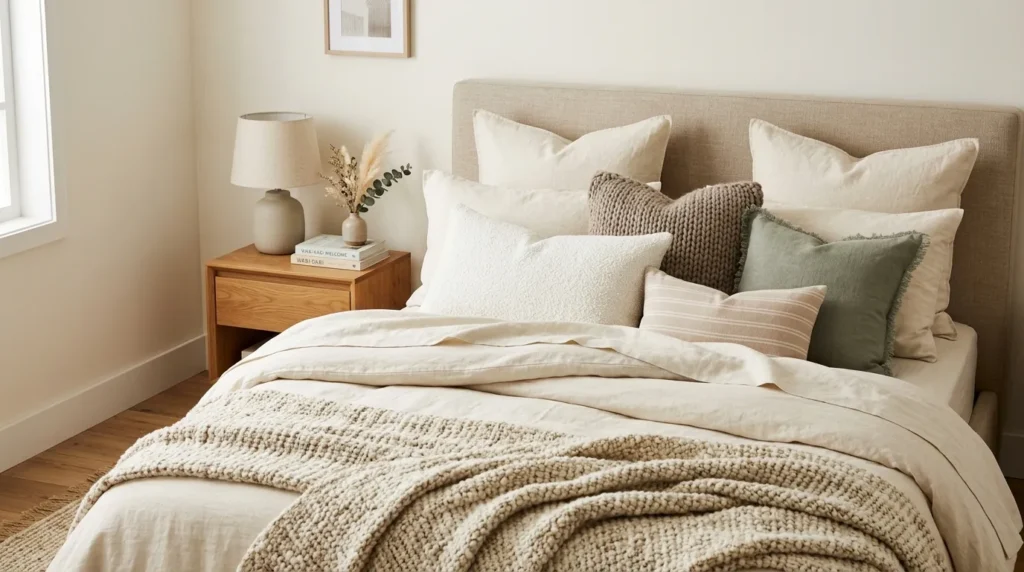
Mixing materials is more effective than simply mixing colors. A linen pillow next to a boucle cushion and a knitted accent can create depth even when every piece is cream or beige.
You can also use pillows to introduce a subtle accent color. Muted sage, dusty blue, warm terracotta, or chocolate brown can add personality without disrupting a neutral foundation.
How To Style It
Start with your practical sleeping pillows, then add larger decorative pillows behind them if desired. Place two or three accent pillows toward the front, using different shapes and textures.
Try pairing a square boucle pillow with a rectangular lumbar cushion. Another option is a simple striped linen pillow combined with a solid textured cushion.
Avoid making every pillow perfectly symmetrical. A slightly relaxed arrangement can make the room feel more lived-in.
For seasonal changes, swap heavier knitted or velvet pillows for linen and cotton covers during warmer months. This lets you refresh the room without replacing your primary bedding.
7. Minimalist Wall Art
Quick Benefits
- Personalizes the bedroom
- Prevents blank walls from feeling stark
- Adds visual balance
- Supports the color palette
- Keeps the modern aesthetic clean
Why It Works
Minimalist wall art doesn’t mean the walls have to be empty. Instead, it means choosing artwork that contributes to the room without overwhelming it.
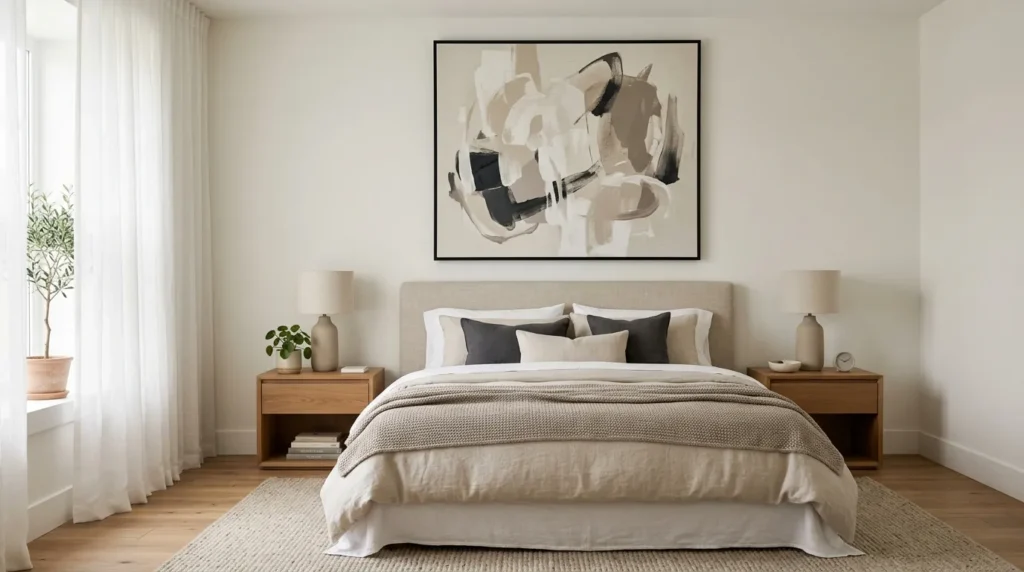
Large-scale abstract artwork, soft botanical prints, black-and-white photography, architectural sketches, and muted landscapes can all work beautifully in a contemporary bedroom. The best choice depends on the mood you’re trying to create.
Artwork is also a useful way to repeat colors that already exist elsewhere in the room. For example, a print containing warm beige, charcoal, and muted olive can visually connect bedding, wood, and greenery.
One oversized piece can often have more impact than a gallery wall filled with small frames. This is particularly helpful in bedrooms where you want a calm environment.
How To Style It
Choose one primary wall for artwork, usually the wall behind the bed or opposite it. If you have a large upholstered headboard, artwork can be positioned above it, provided the proportions leave enough breathing room.
For a softer appearance, use natural wood or warm neutral frames. Thin black frames can create sharper contrast and work especially well with modern furniture.
Keep the artwork relatively simple if your bedding already contains several textures. Conversely, a quiet neutral bed can handle a more expressive abstract print.
When hanging artwork, pay attention to scale. A tiny frame over a large bed can look disconnected, while an oversized piece can create a more intentional designer effect.
8. Cozy Window Layers
Quick Benefits
- Softens architectural lines
- Adds privacy
- Filters harsh daylight
- Creates a finished appearance
- Enhances bedroom comfort
Why It Works
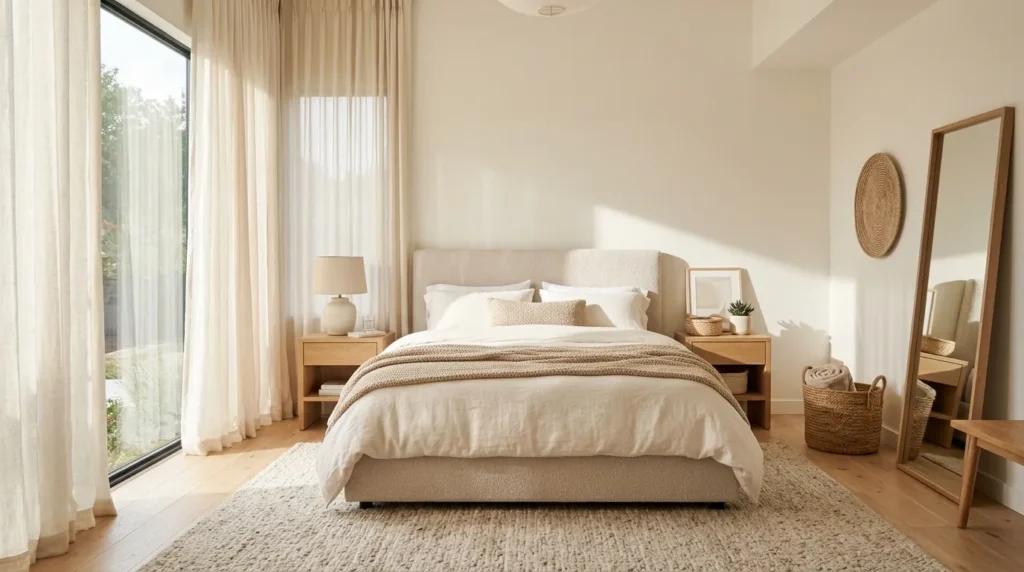
Windows are often overlooked when decorating a bedroom, yet they occupy a significant amount of visual space. Bare windows can make a room feel unfinished, while thoughtfully chosen curtains can immediately add softness.
Layering sheer or light-filtering panels with fuller curtains is particularly effective. During the day, the sheer layer can soften sunlight, while the heavier outer panels provide privacy and darkness when needed.
Fabric also helps balance the harder surfaces commonly found in modern interiors. Smooth flooring, painted walls, metal fixtures, and structured furniture feel much more inviting when paired with flowing textiles.
How To Style It
For a timeless look, choose floor-length curtains in ivory, warm white, oatmeal, or light beige. Hang the curtain rod higher and wider than the window frame when possible to create the impression of greater height and width.
Linen-look fabrics are excellent for a relaxed modern bedroom because they have natural-looking texture without appearing overly formal.
If you need better light control, choose lined curtains or combine them with shades. Blackout options can be particularly useful in a bedroom where sleep quality and privacy are priorities.
Avoid overly busy curtain patterns unless the rest of the room is extremely simple. Solid or subtly textured fabrics usually create the calmest result.
9. Organic Decorative Details
Quick Benefits
- Adds personality
- Brings natural texture indoors
- Prevents sterile styling
- Works with neutral colors
- Creates small visual moments
Why It Works
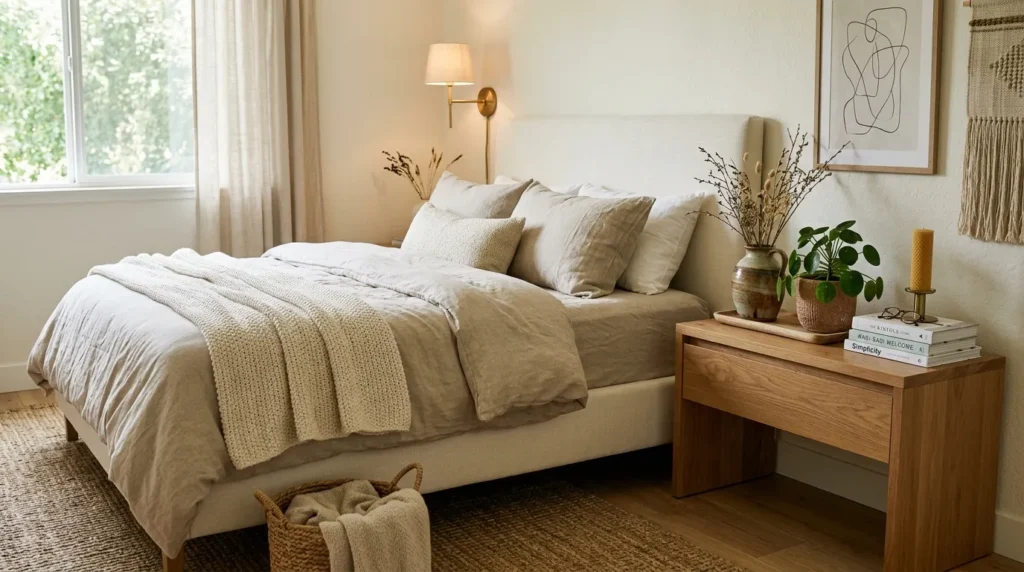
The finishing touches often determine whether a modern bedroom feels like a real home or a showroom. Organic details such as ceramics, greenery, woven baskets, stone objects, and natural wood accessories introduce small variations that make the space feel more personal.
These details don’t need to be expensive. A handmade-looking ceramic vase, small plant, woven basket, or wooden tray can provide enough contrast to keep a neutral bedroom visually interesting.
The important thing is editing. Modern styling depends heavily on negative space, so adding objects simply because there is an empty surface can quickly create clutter.
How To Style It
Choose a few decorative pieces that have different shapes and textures. A ceramic vase beside a smooth lamp can create an appealing contrast. A woven basket near a dresser can provide practical storage while contributing to the design.
Greenery is another easy addition. A small olive tree, pothos, eucalyptus, or simple leafy plant can introduce a natural color without overwhelming the palette.
Use trays on nightstands to group smaller objects such as a candle, book, glasses, or jewelry dish. This keeps everyday items contained and makes the surface look more intentional.
Think in small groupings rather than decorating every available surface.
10. Calm Tonal Styling
Quick Benefits
- Creates a sophisticated appearance
- Makes small rooms feel calmer
- Builds depth through subtle contrast
- Keeps the palette cohesive
- Works beautifully with modern furniture
Why It Works
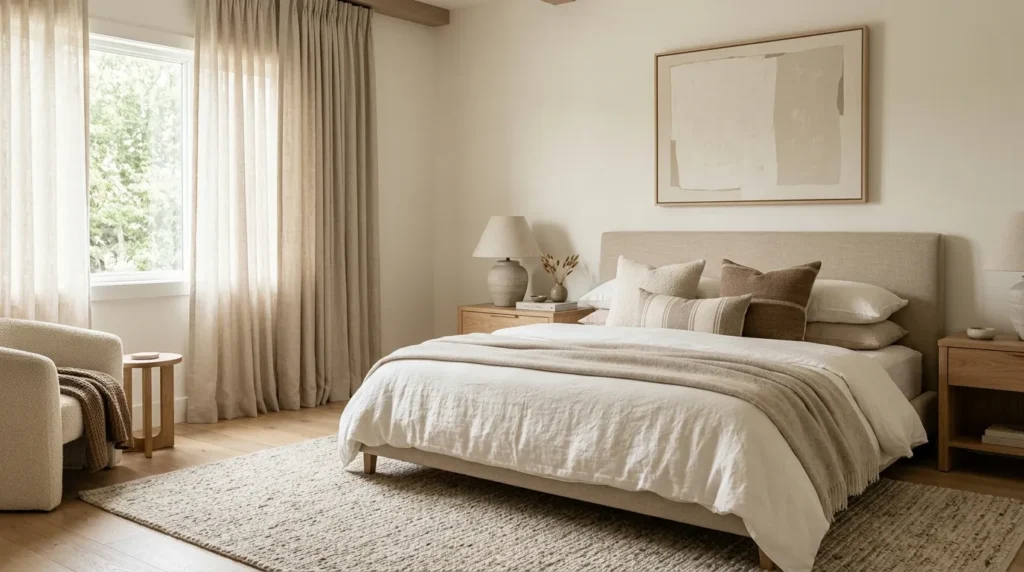
Tonal decorating is one of the easiest ways to create a sophisticated modern bedroom. Instead of choosing many unrelated colors, you work within one family and vary the shades, textures, and materials.
A room built around warm beige, for example, might include ivory bedding, oatmeal curtains, taupe upholstery, natural oak, and a slightly darker camel throw. None of these colors need to match exactly. Their subtle differences create depth while maintaining visual calm.
This approach is especially useful when you want the bedroom to feel restful rather than energetic. The eye moves naturally around the space because there are fewer abrupt color changes.
Tonal styling also makes texture more important. When colors are similar, linen, wool, boucle, wood, ceramics, and woven materials become the elements that create visual interest.
How To Style It
Choose one dominant color family first. Warm neutrals are a dependable option, but you can also build a tonal bedroom around soft gray, muted sage, dusty blue, or warm brown.
Use your chosen color in different intensities rather than repeating exactly the same shade everywhere. For example, combine pale cream with medium beige and deeper taupe.
Then introduce contrasting materials. Pair smooth painted furniture with woven textiles, soft bedding, natural wood, and textured upholstery.
Keep the largest elements relatively quiet and use smaller accessories to introduce deeper tones. This creates a layered appearance without making the bedroom feel visually busy.
FAQ
How do you make a modern bedroom feel cozy?
The easiest approach is to combine clean-lined furniture with soft textiles and warm lighting. Layer bedding with different textures, add a comfortable rug, introduce natural wood, and use warm-toned lamps instead of relying only on overhead lighting.
What colors make a modern bedroom feel warm?
Cream, ivory, beige, taupe, oatmeal, warm gray, muted brown, dusty blue, and soft sage can all create a comfortable modern atmosphere. Warm undertones generally make a space feel more inviting than stark whites or very cool grays.
How many pillows should go on a modern bed?
There is no strict number, but keeping the arrangement edited usually works best. A few sleeping pillows combined with two to four decorative pillows can provide layering without making the bed difficult to use.
What type of rug works best in a modern bedroom?
Choose a rug based on comfort, scale, and maintenance needs. Wool, cotton, and quality synthetic rugs can all work well. Neutral colors and subtle patterns tend to complement modern bedrooms without competing with the furniture.
How can I make a small bedroom look more modern?
Keep the furniture streamlined, use a restrained color palette, maximize natural light, and avoid unnecessary decorative pieces. Wall-mounted lighting, under-bed storage, mirrors, and a correctly sized rug can also help the room feel more intentional.
What lighting is best for a cozy bedroom?
Layered lighting works best. Combine bedside lamps or sconces with a ceiling fixture and, when space allows, a floor lamp. Warm, dimmable bulbs can create a much more relaxing atmosphere in the evening.
Can modern bedroom decor still feel personal?
Absolutely. Modern style doesn’t require a completely impersonal room. Use meaningful artwork, books, plants, ceramics, textiles, photographs, or other carefully selected objects to reflect your personality while keeping the overall composition edited.
Conclusion
A modern bedroom doesn’t have to choose between looking polished and feeling comfortable. The most successful spaces combine both qualities by balancing clean architectural lines with soft, tactile layers.
Start with the bed because it usually occupies the largest visual area. Layer neutral bedding, introduce a few contrasting textures, and add a comfortable throw. From there, look at the floor, windows, lighting, and furniture. A plush rug can soften hard flooring, curtains can make the architecture feel gentler, and warm wood can bring personality to a room filled with modern finishes.
Don’t feel pressured to change everything at once. One of the easiest ways to refresh a bedroom is to work in stages. Add better lighting first, then update the bedding, introduce a rug, or bring in a few natural accessories. Small changes can have a surprisingly large effect when they work together.
The goal isn’t to create a bedroom that looks perfect only for a photograph. It should be a room that feels good on an ordinary evening, a slow weekend morning, and every night in between.
Choose the textures, colors, and materials that make you want to stay awhile, and let the modern elements provide the structure while the cozy layers provide the warmth.