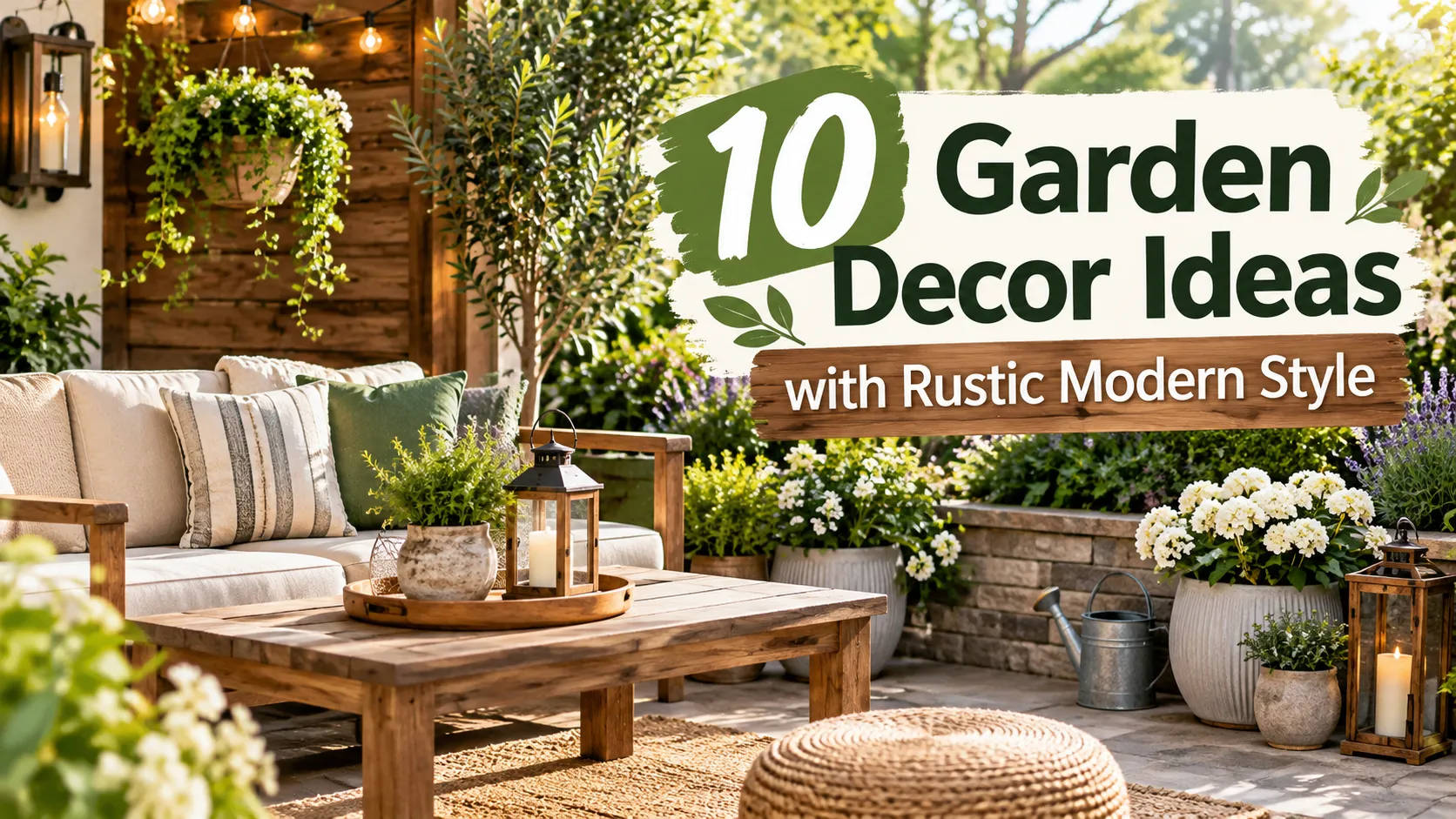
10 Garden Decor Ideas with Rustic Modern Style
A beautiful garden doesn’t have to choose between the warmth of rustic decorating and the clean simplicity of modern design. In fact, combining the two can create one of the most inviting outdoor styles for a backyard, patio garden, or small urban space.
Rustic modern garden decor works because it balances opposites. Weathered wood feels warmer when paired with streamlined furniture. Rough stone looks more refined beside simple metal planters. Lush greenery softens contemporary lines, while restrained colors keep rustic materials from feeling too heavy.
The result is an outdoor space that feels relaxed and collected without looking overly themed.
I’ve noticed that the best rustic-modern gardens usually rely on a small number of materials repeated throughout the space. Think natural wood, stone, matte metal, terracotta, and plenty of greenery. Instead of filling every corner with accessories, each piece has room to breathe.
This style is also wonderfully adaptable. You can create a rustic-modern look with a few planters and a bench, or build an entire outdoor living area around the aesthetic. It works beautifully for homeowners who want their garden to feel polished enough for entertaining but comfortable enough for everyday use.
Whether you’re refreshing an established backyard or starting with a blank patio, these ideas can help you create a garden that feels warm, contemporary, and connected to nature. From reclaimed wood accents to minimalist fire features, each idea focuses on practical ways to bring rustic character and modern simplicity together.
Table of Contents
1. Weathered Wood Seating
Bring rustic warmth into the garden with simple wooden benches, chairs, and outdoor seating.
2. Stone Garden Edges
Define planting areas with natural stone for an organic look with modern structure.
3. Matte Metal Planters
Use streamlined metal containers to add contemporary contrast to natural greenery.
4. Rustic Pergola Retreat
Create a shaded outdoor room using warm wood and clean architectural lines.
5. Modern Gravel Paths
Combine practical gravel with simple geometric layouts for a relaxed garden pathway.
6. Terracotta Accents
Add earthy color and handcrafted character through carefully selected terracotta pieces.
7. Minimal Fire Feature
Make evenings more inviting with a simple fire pit or contemporary outdoor fireplace.
8. Reclaimed Wood Details
Introduce authentic rustic texture through fences, screens, shelves, and decorative elements.
9. Sculptural Greenery
Use architectural plants and controlled planting arrangements to create modern visual interest.
10. Layered Outdoor Lighting
Combine warm illumination with rustic materials to create a welcoming evening atmosphere.
1. Weathered Wood Seating
Quick Benefits
- Adds natural warmth
- Creates a comfortable gathering area
- Blends rustic and modern elements
- Works in gardens of many sizes
- Ages beautifully outdoors
Why It Works
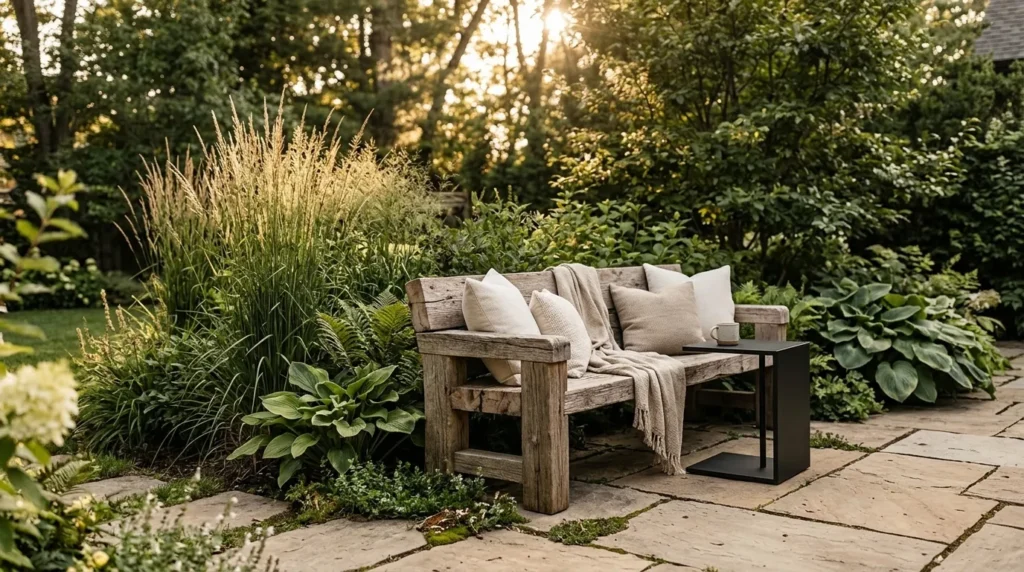
Weathered wood is one of the easiest ways to introduce rustic character without making a garden feel old-fashioned. Its natural grain and slightly imperfect surface bring warmth to contemporary outdoor spaces, while a simple silhouette keeps the overall look modern. The contrast becomes especially attractive when wooden seating is surrounded by clean paving, clipped greenery, or matte black accessories. Rather than choosing heavily carved or ornate furniture, look for pieces with straightforward proportions. A simple bench, low lounge chair, or streamlined dining set can provide all the rustic texture the garden needs without overwhelming the landscape.
How To Style It
Place a weathered wood bench along a garden wall, beneath a tree, or beside a planting bed. For a larger outdoor area, use a simple wood dining table with clean-lined chairs.
Balance the aged appearance of the wood with contemporary textiles. Cream, oatmeal, charcoal, and muted olive cushions work particularly well.
Add one or two simple accessories, such as a ceramic planter or black metal lantern. Avoid overcrowding the seating area.
If the furniture will remain exposed to the elements, choose outdoor-rated wood or use an appropriate protective finish. Allowing suitable wood to develop a natural patina can actually strengthen the rustic side of the design.
2. Stone Garden Edges

Quick Benefits
- Defines planting beds
- Adds natural texture
- Creates visual structure
- Requires relatively little decoration
- Works with modern architecture
Why It Works
Natural stone provides the perfect bridge between rustic and modern garden design. Its irregular texture brings an earthy quality, while a carefully planned border or geometric arrangement gives the landscape a more contemporary appearance. Stone can also make planting beds feel established and intentional rather than loosely scattered around the property. You don’t need expensive masonry to achieve the effect. Fieldstone, gravel, larger landscape rocks, or locally appropriate stone can all create attractive boundaries. The secret is repetition. When the same stone appears in multiple areas, the garden feels cohesive rather than pieced together.
How To Style It
Use stone to outline a curved planting bed, separate lawn from garden, or define a small seating area. For a modern look, keep the edges relatively clean and consistent.
Pair warm stone with ornamental grasses, shrubs, lavender, or other plants suited to your climate. Let some greenery soften the edges rather than creating perfectly rigid boundaries.
If your home has contemporary architecture, choose larger stones with simpler shapes. A rustic cottage-style home can support more irregular natural stone.
Repeat the same material in a pathway, raised bed, or small retaining wall. This visual connection helps tie separate parts of the garden together.
3. Matte Metal Planters
Quick Benefits
- Introduce contemporary contrast
- Highlight greenery
- Work in small spaces
- Create strong vertical accents
- Pair easily with wood and stone
Why It Works
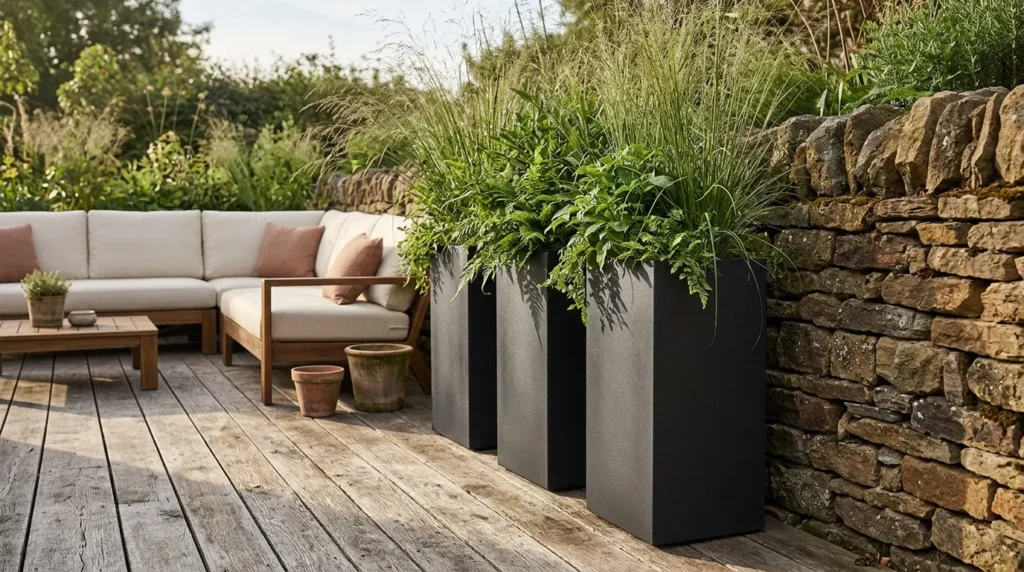
Matte metal planters are an excellent way to bring modern character into a rustic landscape. Their clean shapes contrast with the irregular textures of wood, stone, and foliage. Black, charcoal, dark bronze, and weathered steel can all create a sophisticated foundation for greenery. The contrast is particularly effective when the planters are simple enough to let the plants remain the focus. Instead of filling the garden with decorative containers in different finishes, repeat one style in several strategic locations. This creates visual rhythm and gives the garden a more designed appearance.
How To Style It
Choose tall cylindrical, rectangular, or gently tapered planters with a matte finish. Place them near a patio entrance, along a pathway, or around an outdoor seating area.
Fill them with architectural plants, ornamental grasses, herbs, or flowering varieties appropriate for your climate.
Pair dark metal with warm wood and pale stone for contrast. If the garden already contains darker hardscaping, consider weathered steel or muted bronze instead.
Use matching planters in pairs to frame a doorway or seating zone. For a more relaxed arrangement, group three containers in different heights while keeping the finish consistent.
4. Rustic Pergola Retreat
Quick Benefits
- Creates a defined outdoor room
- Provides shade
- Adds architectural interest
- Supports climbing plants
- Makes entertaining more comfortable
Why It Works
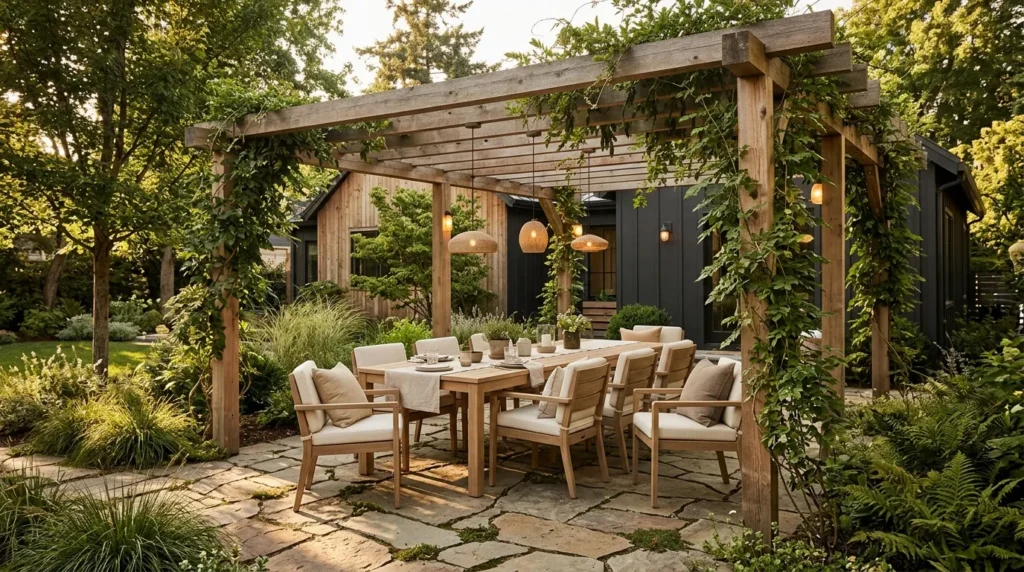
A pergola naturally combines rustic and modern qualities because it can be constructed from warm, substantial materials while maintaining a simple architectural form. Wood gives the structure an organic connection to the garden, while clean posts and evenly spaced beams provide contemporary structure. A pergola also transforms an open patio into a destination. Once furniture, lighting, and greenery are added, the area can feel like a true outdoor room. This is particularly useful for large backyards where a single patio might otherwise feel disconnected from the surrounding landscape.
How To Style It
Choose a pergola with straightforward lines and natural wood tones. Cedar, appropriately treated timber, or other suitable outdoor materials can create a warm foundation.
Add a dining table or lounge seating beneath it. Keep furniture relatively streamlined and use neutral cushions to maintain the modern side of the design.
Train suitable climbing plants along selected posts rather than covering every surface immediately. Wisteria, climbing roses, jasmine, or other regionally appropriate vines can add softness over time.
Finish the structure with warm outdoor lighting. Small pendant-style fixtures, string lights, or discreet integrated lighting can make the space inviting after sunset.
5. Modern Gravel Paths
Quick Benefits
- Adds texture
- Provides practical garden access
- Creates visual structure
- Works for many garden styles
- Can be easier to install than hard paving
Why It Works
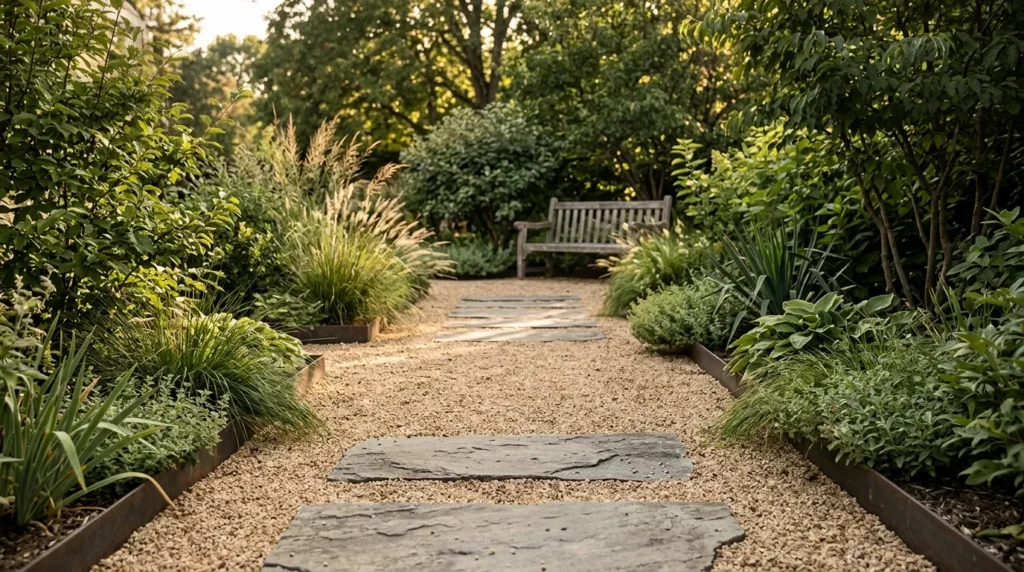
Gravel has an inherently rustic character, but its appearance can become surprisingly modern when used within a clear layout. Straight paths, broad geometric sections, and crisp borders give loose gravel a sense of structure. The material also creates a pleasing contrast against lush planting and smooth contemporary furniture. Gravel is especially useful when you want to connect multiple areas without covering the entire garden in hardscape. It can also help define zones while maintaining a permeable, natural-looking surface.
How To Style It
Use compacted gravel for a garden path, seating pad, or transition between planting areas. Choose a color that complements the architecture and surrounding stone.
Create a clean edge with steel landscape edging, stone borders, or other suitable materials. This prevents gravel from gradually spreading into planting beds.
Large stepping stones can add another layer of texture while creating a comfortable walking surface.
Keep the surrounding plants slightly informal. Ornamental grasses, low shrubs, and groundcovers can soften the geometry without making the path look messy.
6. Terracotta Accents

Quick Benefits
- Adds earthy warmth
- Introduces handmade character
- Complements greenery
- Works with neutral palettes
- Adds rustic texture without clutter
Why It Works
Terracotta has a natural warmth that works beautifully with both rustic and contemporary garden elements. Its earthy orange, clay, and muted red tones provide a subtle contrast against green foliage while bringing a handmade quality to the space. Modern gardens can sometimes feel overly cool when dominated by gray stone and black metal. A few terracotta pieces introduce warmth without requiring bright colors. The key is restraint. A small collection of well-chosen pots often looks more sophisticated than dozens of mismatched containers.
How To Style It
Use terracotta pots in varying sizes around a patio, along a wall, or beside a garden entrance. Choose simple traditional forms rather than overly decorative shapes.
Group two or three containers together and vary their heights. Fill them with herbs, grasses, olive-like plants where climate permits, or flowering plants appropriate to your region.
Pair terracotta with black metal furniture and warm wood to create a balanced rustic-modern palette.
Allow the pots to develop natural character over time. Slight weathering can enhance their appeal, especially when combined with contemporary furniture and crisp garden edges.
7. Minimal Fire Feature
Quick Benefits
- Creates a natural focal point
- Adds evening warmth
- Encourages outdoor gatherings
- Extends seasonal use
- Combines beautifully with stone and metal
Why It Works
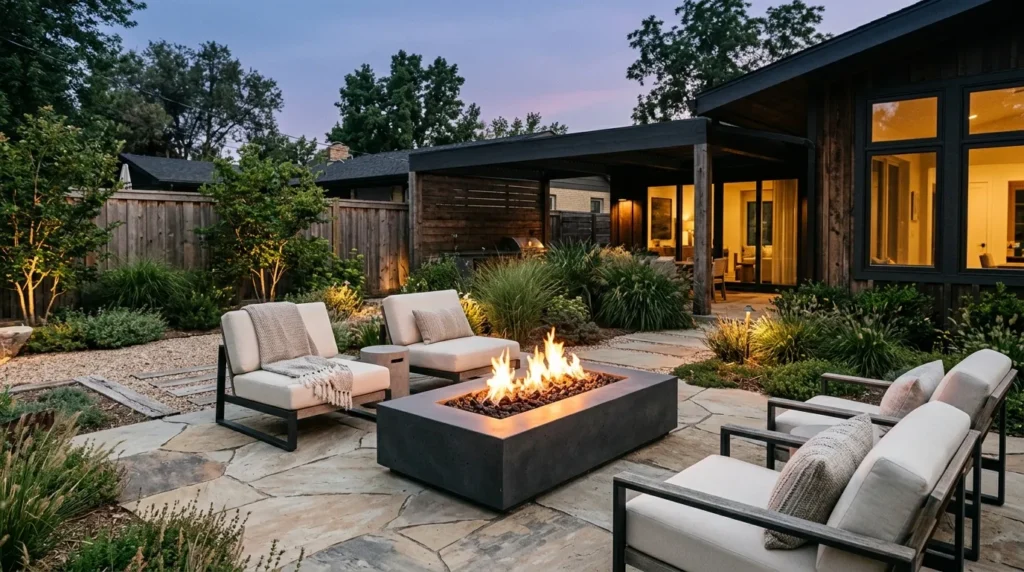
A fire feature can become the visual and social center of a rustic-modern garden. The natural character of fire pairs beautifully with stone and wood, while a simple geometric design keeps the installation contemporary. A fire pit doesn’t need to be elaborate to make an impact. In many cases, a low-profile circular or rectangular feature surrounded by comfortable seating creates a more sophisticated appearance than a heavily decorated outdoor fireplace. The surrounding landscape should remain relatively simple so the fire becomes the focal point rather than one of many competing features.
How To Style It
Choose a fire pit or fire table with a clean silhouette and materials that relate to the rest of the garden. Concrete, stone, metal, and masonry can all work.
Arrange comfortable outdoor chairs around the feature while maintaining appropriate safety clearances. A nearby wood storage area can become a practical rustic detail if your fire setup uses wood.
Use gravel, stone, or pavers underneath the seating zone. Keep plants and combustible materials at appropriate distances according to local requirements and manufacturer instructions.
Add a few neutral cushions and warm outdoor lighting nearby to make the area comfortable without competing with the fire.
8. Reclaimed Wood Details
Quick Benefits
- Adds authentic rustic character
- Introduces natural texture
- Works for practical features
- Creates a sense of history
- Pairs beautifully with modern materials
Why It Works
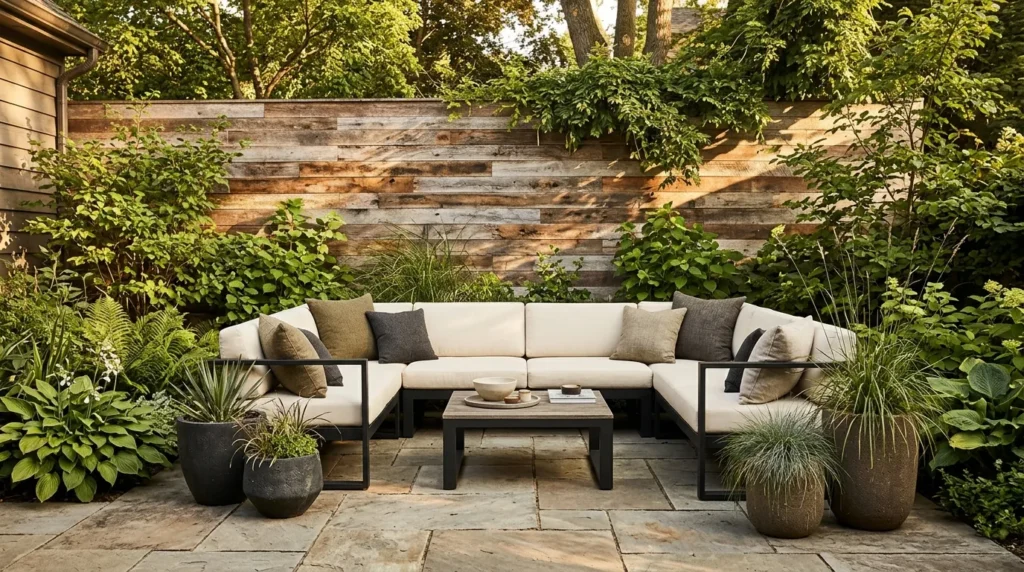
Reclaimed or naturally weathered wood can give a garden an immediate sense of character. Unlike brand-new lumber, its imperfections provide visual texture and make the landscape feel less manufactured. Used selectively, reclaimed wood can soften contemporary structures while still supporting a clean overall design. It can become a privacy screen, planter box, bench, garden shelf, or decorative wall treatment. The important distinction is choosing pieces that look intentionally incorporated rather than making every surface rustic. One or two substantial applications can have more impact than many small decorative objects.
How To Style It
Use reclaimed wood for a horizontal privacy screen behind a modern seating area. Alternatively, create simple raised planters or a narrow garden bench from suitable outdoor-rated timber.
Pair the wood with matte black hardware or metal edging to strengthen the modern contrast.
Keep the surrounding planting relatively lush and natural. Greenery provides a soft counterpoint to the straight lines of the wood.
Before using reclaimed lumber outdoors, make sure it is structurally appropriate, free from unsafe treatments, and suitable for the intended application. Weather-resistant materials are especially important for structures exposed to moisture.
9. Sculptural Greenery

Quick Benefits
- Creates strong visual interest
- Adds modern structure
- Softens hard landscaping
- Makes small gardens feel intentional
- Provides year-round form when appropriate
Why It Works
Plants don’t have to be loose and informal to feel natural. Sculptural greenery can provide a strong architectural element while maintaining the organic character that makes gardens inviting. Plants with distinctive shapes, upright growth, dramatic foliage, or strong branching structures can act almost like outdoor artwork. The contrast between controlled plant placement and natural growth is especially effective in rustic-modern spaces. Instead of filling every bed with multiple varieties, select a few plants with memorable forms and give them room to stand out.
How To Style It
Place architectural plants near entrances, patios, or pathway intersections where their shapes can be appreciated.
Use repetition to create rhythm. Three similar plants spaced along a wall often look more sophisticated than several unrelated varieties.
Pair sculptural greenery with simple gravel, large stone, or weathered wood. These materials provide a quiet background that allows the foliage to become the focus.
Consider seasonal changes when choosing plants. Evergreen forms can provide structure throughout the year, while grasses and flowering plants can introduce movement and seasonal interest.
10. Layered Outdoor Lighting

Quick Benefits
- Makes the garden usable after dark
- Highlights textures
- Creates warmth and atmosphere
- Improves pathway visibility
- Enhances outdoor entertaining
Why It Works
Lighting is what allows a garden to continue feeling intentional after sunset. During the day, wood grain, stone texture, and foliage create much of the visual character. At night, strategically placed lights can reveal those same details in a completely different way. A rustic-modern garden benefits from a combination of understated fixtures and warm illumination. Rather than making every area equally bright, focus on paths, seating, architectural plants, trees, and gathering spaces. This creates depth and keeps the atmosphere relaxed.
How To Style It
Begin with practical lighting along steps, pathways, and frequently used areas. Then add subtle accent lighting beneath trees, near stone walls, or behind planting beds.
Warm string lights can soften a modern pergola, while simple wall sconces can provide practical illumination around doors and patios.
Choose fixtures in finishes that complement the garden, such as black metal, aged bronze, or weathered materials.
Avoid placing bright lights directly in people’s sightlines. Instead, illuminate surfaces and landscape features so the light feels indirect and atmospheric.
Frequently Asked Questions
What is rustic modern garden style?
Rustic modern garden style combines natural, weathered materials with clean contemporary shapes. Common elements include wood, natural stone, gravel, matte metal, simple furniture, and structured greenery. The goal is to create an outdoor space that feels warm and organic while maintaining a polished, uncluttered appearance.
What colors work best in a rustic modern garden?
A restrained palette usually works best. Consider warm beige, cream, charcoal, brown, muted green, terracotta, natural wood, and stone tones. These colors complement both rustic materials and modern architecture. Small amounts of darker metal can provide contrast without making the garden feel visually heavy.
How do I make a modern garden feel more rustic?
Introduce natural and weathered materials. Reclaimed wood, irregular stone, terracotta pots, gravel, woven outdoor furniture, and textured planting can soften clean contemporary lines. You don’t need to replace existing modern elements. Adding a few rustic materials strategically can create the desired balance.
How do I make a rustic garden look more modern?
Simplify the shapes and reduce visual clutter. Choose furniture with clean lines, repeat a limited number of materials, use structured planting, and introduce matte metal or geometric planters. Keeping the color palette controlled can also make rustic materials feel much more contemporary.
Is gravel good for a modern garden?
Yes. Gravel can look very modern when installed within clear geometric boundaries. Pair it with large stepping stones, metal edging, simple planting, or contemporary furniture. Choose a gravel color that complements your home’s exterior and use appropriate installation methods for stability and drainage.
What plants work with rustic modern garden decor?
Plants with strong structure and natural texture work particularly well. Ornamental grasses, evergreen shrubs, architectural foliage, herbs, small trees, and climate-appropriate perennials can all fit the style. Choose plants suited to your USDA growing zone, sunlight, soil, and available maintenance time.
How can I decorate a small garden in rustic modern style?
Keep the design simple and focus on a few strong materials. A small wood bench, two large matte planters, gravel or stone flooring, and layered greenery can be enough to establish the style. Vertical planting, wall-mounted planters, and a compact pergola can add character without taking valuable floor space.
Conclusion
Rustic modern garden design is really about finding the right balance between natural character and contemporary simplicity. You don’t have to choose between a warm, relaxed garden and a polished outdoor space. Wood, stone, greenery, terracotta, and weathered materials can provide the rustic side, while clean furniture, restrained colors, matte metals, and structured layouts bring the modern edge.
If you’re starting from scratch, choose two or three materials as your foundation. Natural wood paired with stone and black metal is an easy combination to build around. Then introduce greenery in layers, using plants with different heights, textures, and forms.
For an existing garden, you can create a noticeable change without renovating everything. Add a weathered bench, replace mismatched containers with coordinated planters, introduce a gravel path, or create a simple outdoor seating zone beneath a pergola.
The most successful spaces don’t feel overly decorated. They feel intentional, comfortable, and connected to their surroundings.
Start with one area of your garden and let the style develop gradually. A few thoughtful changes can create an outdoor space that feels equally at home beside a modern house, a traditional property, or a cozy suburban backyard.
Related Articles
- 10 Backyard Landscape Design Ideas That Feel Like a Resort
- 11 Small Backyard Ideas for Stylish Outdoor Living
- 10 Modern Patio Decorating Ideas for a Beautiful Outdoor Space
- 11 Backyard Privacy Ideas for a More Secluded Garden
- 10 Outdoor Garden Lighting Ideas for Cozy Evenings