
10 DIY Fire Pit Ideas for Family Gatherings
A backyard fire pit has a way of turning an ordinary evening into something everyone wants to linger around. There’s something naturally inviting about gathering outdoors, sharing food, telling stories, roasting marshmallows, and enjoying the warmth of a glowing fire.
The good news is that a family-friendly fire pit doesn’t have to look complicated or expensive. With the right design, you can create a comfortable backyard gathering spot that feels intentional and works beautifully with your existing landscape.
The best DIY fire pit projects combine the fire feature with the space around it. Comfortable seating, a level surface, soft lighting, nearby tables, and a little privacy can make the area feel much more complete. I’ve noticed that homeowners often focus so much on building the pit itself that they overlook the surrounding layout. Yet the seating arrangement and overall flow are what determine whether people actually enjoy using the space.
Before starting any project, check your local fire codes, HOA rules, and property requirements. Fire pits need appropriate clearances from structures, trees, fences, and other combustible materials. Always follow the manufacturer’s instructions for purchased components and use fire-safe materials intended for outdoor applications.
Whether you have a large backyard or a compact patio, these ideas offer inspiration for creating a welcoming outdoor gathering area. Some are rustic and natural, while others have a cleaner modern appearance. The common thread is simple: create a safe, comfortable place where family and friends naturally want to gather.
Table of Contents
1. Classic Stone Circle
Create a timeless round fire pit using durable masonry materials and comfortable surrounding seating.
2. Gravel Fire Pit Zone
Use a dedicated gravel area to define a casual and practical outdoor gathering space.
3. Built-In Stone Pit
Create a substantial focal point with a permanent stone structure that complements the landscape.
4. Modern Concrete Pit
Combine clean lines and contemporary materials for a sleek backyard fire feature.
5. Rustic Brick Pit
Bring traditional character outdoors with warm brick and relaxed garden surroundings.
6. Fire Pit With Benches
Make family gatherings easier with built-in or freestanding seating arranged around the fire.
7. Patio Fire Table
Create a polished gathering zone with a compact fire table that doubles as an outdoor surface.
8. Sunken Gathering Area
Use a recessed seating arrangement to create an intimate backyard destination.
9. Cooking Fire Pit
Design a practical outdoor feature that can support simple family meals and fireside cooking.
10. Cozy Lighting Retreat
Complete the fire pit area with layered lighting, comfortable seating, and inviting accessories.
1. Classic Stone Circle

Quick Benefits
- Timeless backyard appearance
- Easy to coordinate with natural landscaping
- Creates a natural gathering point
- Works with many seating styles
- Complements rustic and traditional homes
Why It Works
A circular stone fire pit is popular for good reason: the shape naturally encourages conversation. Everyone can face toward the center while remaining part of the same group. Natural stone or purpose-made fire pit blocks also blend easily with garden beds, gravel, lawns, and patios. The circular form feels relaxed rather than overly formal, making it particularly appealing for family gatherings. A common mistake is building the pit too close to the house or squeezing seating into an undersized area. The fire feature should have enough surrounding space for people to move comfortably and for the seating arrangement to remain practical.
How To Style It
Choose a level, stable location that meets your local requirements for fire pit placement and clearance. Use only materials specifically rated or suitable for fire pit construction.
Create a simple circular ring with appropriately rated masonry units or natural stone designed for the application. Avoid materials that can crack, explode, or release harmful substances when exposed to high heat.
Surround the pit with a noncombustible surface such as gravel, pavers, or other suitable hardscape. Arrange weather-resistant Adirondack-style chairs, simple metal chairs, or outdoor benches around the perimeter.
Keep the furniture far enough away to maintain safe clearances while still allowing comfortable conversation. A small side table nearby can hold drinks and snacks.
2. Gravel Fire Pit Zone
Quick Benefits
- Defines the fire area
- Creates a casual outdoor atmosphere
- Provides good visual separation
- Works well for larger yards
- Complements natural landscaping
Why It Works
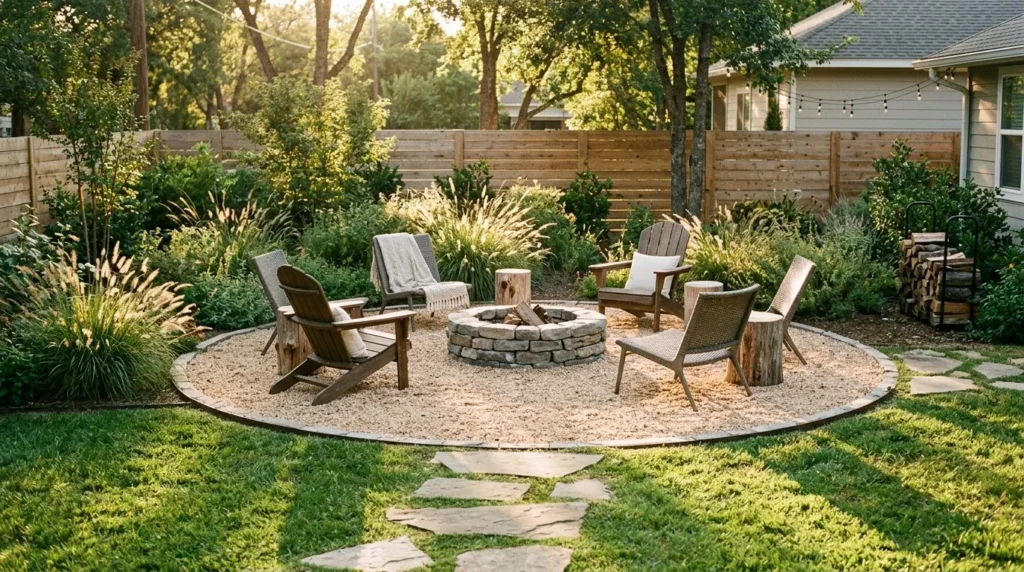
A dedicated gravel zone can make a fire pit feel like a planned destination instead of something added randomly to the backyard. Gravel provides a visual transition between the fire area and lawn or planting beds while creating a practical noncombustible surface when properly installed and appropriate for the application. It also has a relaxed character that works especially well with rustic and modern outdoor furniture. By giving the fire pit its own “room,” you can create a stronger sense of design without constructing an elaborate patio.
How To Style It
Define the fire pit area using landscape edging or a natural stone border. Choose an appropriately sized gravel product suitable for the intended use and install it over a properly prepared base.
Keep the shape simple. A circle, square, or soft organic shape can work depending on the surrounding landscape.
Place the fire pit in the center and arrange comfortable outdoor chairs around it. For a family-friendly setup, choose seating that is easy to move so the layout can adapt when guests arrive.
Add a few large landscape stones or planting beds around the outer edge, keeping vegetation and combustible materials at safe distances from the fire feature.
3. Built-In Stone Pit

Quick Benefits
- Creates a substantial focal point
- Adds permanent landscape character
- Complements natural surroundings
- Can increase the visual cohesion of a yard
- Works beautifully with outdoor seating
Why It Works
A built-in stone fire pit can make an outdoor gathering area feel like a permanent extension of the home. Natural stone has texture and visual weight, which helps the fire feature feel connected to the surrounding landscape. This style is particularly effective in larger yards where a lightweight portable pit might feel visually insignificant. The stone can echo existing retaining walls, pathways, or garden borders to create continuity. If you’re building a permanent structure, however, careful planning matters. The location, foundation, materials, drainage, and fire safety requirements should all be considered before construction begins.
How To Style It
Use natural stone or purpose-made masonry products appropriate for fire pit construction. Coordinate the stone color with existing pathways, patios, or exterior walls.
Keep the design relatively simple. A substantial circular or square structure can become the focal point without requiring decorative detailing.
Surround the pit with a wide noncombustible area and comfortable outdoor seating. Add a low outdoor table for drinks or snacks.
If the fire pit is built near a retaining wall or landscape bed, maintain all required clearances. Consult local regulations and professional guidance when a project involves permanent masonry, gas lines, electrical work, or structural changes.
4. Modern Concrete Pit

Quick Benefits
- Clean contemporary appearance
- Works well with modern homes
- Creates a strong focal point
- Pairs easily with neutral furniture
- Suitable for compact outdoor designs
Why It Works
A streamlined concrete fire feature can bring a modern architectural quality to the backyard. Its simple geometry provides contrast against soft greenery and natural textures, while neutral colors keep the space visually calm. This idea is especially useful when your home already has contemporary architectural elements. Instead of introducing another rustic feature, a clean-lined fire pit can connect the outdoor area with the design language of the house. The surrounding materials are just as important as the fire feature itself. Gravel, large-format pavers, simple furniture, and restrained planting help maintain the modern character.
How To Style It
Look for a commercially manufactured fire table or fire pit made specifically for outdoor fire use rather than improvising with ordinary concrete products.
Choose a rectangular, square, or low-profile round design depending on the available space.
Pair it with streamlined lounge chairs in cream, gray, taupe, or charcoal. Use a large-format paver or gravel surface beneath the seating area to reinforce the contemporary aesthetic.
Add a few architectural plants around the outer edge, but avoid overcrowding the space. The simplicity of the layout is what gives this design its polished appearance.
5. Rustic Brick Pit

Quick Benefits
- Adds traditional charm
- Creates a warm color palette
- Works well with gardens
- Blends with older homes
- Easy to coordinate with wood furniture
Why It Works
Brick brings warmth and character to an outdoor fire area. Its familiar texture makes a fire pit feel connected to traditional backyard gatherings, while a simple circular or square design prevents the feature from feeling overly formal. Brick also pairs naturally with wood, greenery, gravel, and neutral fabrics. If your backyard already has brick pathways, a brick patio, or traditional architecture, repeating the material around the fire area can create a cohesive landscape. The key is choosing appropriate, fire-rated materials rather than assuming every type of brick is suitable for direct high-heat exposure.
How To Style It
Use purpose-made fire pit masonry products or materials recommended for the intended temperature and construction method.
Surround the pit with gravel or suitable pavers, then add weather-resistant wood or metal seating.
Cream cushions can soften the warm brick tones, while green planting creates a natural contrast.
A simple wooden side table or outdoor serving cart can make the gathering area more functional. Keep accessories limited so the brick remains the primary rustic feature.
6. Fire Pit With Benches

Quick Benefits
- Provides generous seating
- Encourages group conversation
- Creates a cohesive layout
- Works well for families
- Can maximize available space
Why It Works
For family gatherings, seating can be just as important as the fire itself. Benches allow several people to sit together without requiring numerous individual chairs. They also establish a strong visual relationship between the seating area and the central fire feature. Built-in benches can give a backyard a permanent architectural quality, while freestanding benches provide flexibility. In my experience, the most comfortable fire pit areas aren’t necessarily the largest. They’re the ones where everyone has a clear view of the fire and enough space to sit, stand, and move around without feeling crowded.
How To Style It
Place two long outdoor benches opposite each other or arrange several benches around a circular pit. Choose weather-resistant materials such as treated outdoor wood, appropriate composite materials, or metal designed for outdoor use.
Add removable cushions in neutral colors for comfort. Outdoor fabrics in beige, olive, charcoal, or cream can complement most landscapes.
Leave enough open space between the fire and seating according to applicable safety requirements.
A narrow console or side table behind one bench can provide a practical place for lanterns, drinks, blankets, or serving pieces without crowding the main seating area.
7. Patio Fire Table
Quick Benefits
- Combines fire and tabletop space
- Works well in smaller yards
- Provides a polished appearance
- Supports outdoor entertaining
- Requires less surrounding construction
Why It Works
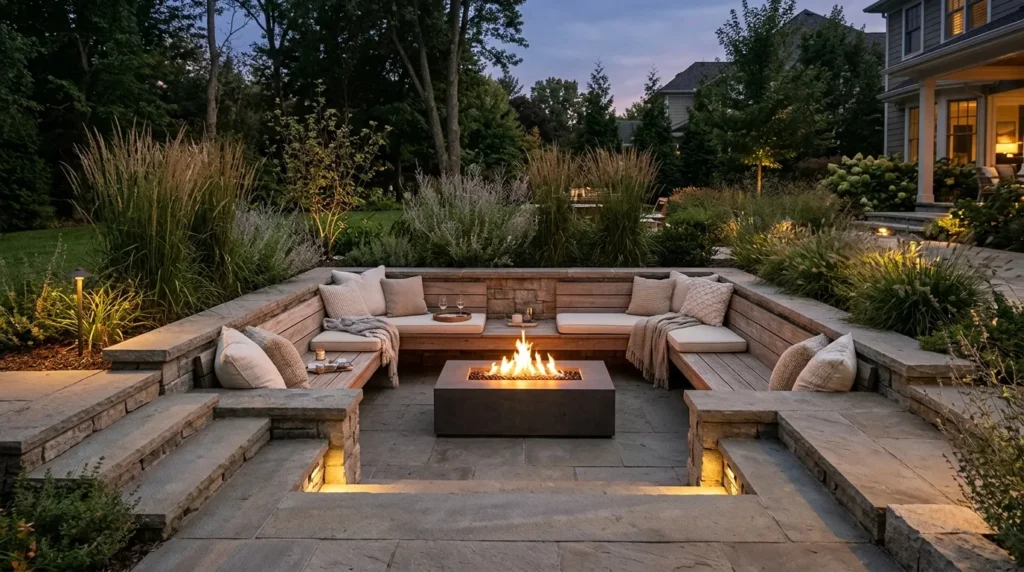
A fire table can be a practical choice when you want the atmosphere of a fire feature without dedicating an entire large area to a traditional pit. The tabletop provides space for drinks and small serving items while the central fire element creates warmth and visual interest. This design is particularly useful on patios and decks where space needs to serve multiple purposes. Because fire tables can use different fuel systems and designs, it’s important to choose a product appropriate for the location and follow its installation and operating instructions carefully.
How To Style It
Choose a fire table that matches the scale of your seating area. A long rectangular model works well with a sectional, while a compact round table can suit two or four chairs.
Keep the surrounding furniture low and comfortable. Use neutral cushions and an outdoor rug where appropriate and safe for the setup.
Add side tables rather than covering the fire table with accessories. Its surface should remain usable.
For gas-powered models, follow all installation, ventilation, fuel, and clearance requirements. Never modify a manufactured fire feature outside the manufacturer’s instructions.
8. Sunken Gathering Area

Quick Benefits
- Creates an intimate atmosphere
- Defines a dedicated outdoor room
- Adds architectural interest
- Makes a large backyard feel organized
- Creates strong visual focus
Why It Works
A sunken seating area creates a feeling of separation from the rest of the yard. Even a shallow change in elevation can make the gathering space feel like its own destination. The lowered arrangement naturally directs attention toward the center, making it especially effective around a fire feature. However, this design requires more planning than a simple freestanding fire pit. Drainage, retaining structures, access, and local building requirements all need to be addressed. When done correctly, the result can feel exceptionally intentional and intimate.
How To Style It
Define the area with appropriate retaining walls and noncombustible hardscaping. If excavation or structural retaining work is required, professional assistance may be appropriate.
Use built-in benches or low outdoor seating around the perimeter, leaving the center open for the fire feature.
Keep the surrounding planting slightly taller than the seating area to enhance the feeling of enclosure, while maintaining all necessary fire clearances.
Add discreet pathway lighting around the access points. This helps make movement into and out of the recessed area easier after dark.
9. Cooking Fire Pit
Quick Benefits
- Combines gathering and outdoor cooking
- Creates interactive family experiences
- Adds functionality
- Encourages longer outdoor meals
- Makes the fire area more versatile
Why It Works
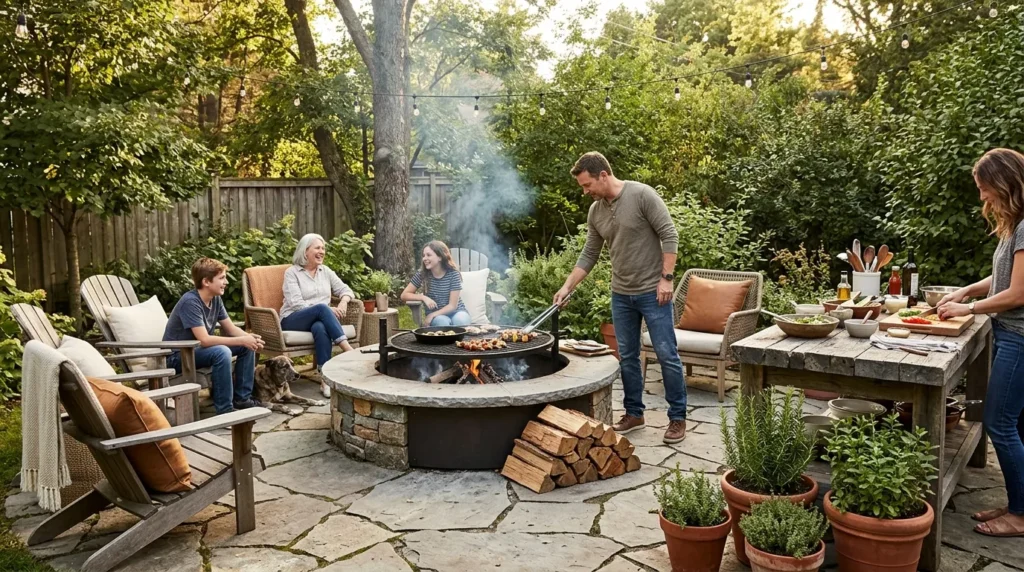
A fire pit can become more than a source of warmth when the design accommodates outdoor cooking. Families can gather around the fire while preparing simple foods, roasting appropriate items, or enjoying casual meals outdoors. The cooking feature should be treated as a functional outdoor appliance rather than improvised over an unsafe fire. A properly designed cooking grate or manufacturer-approved accessory can make the experience more practical. The surrounding setup should also include surfaces for food preparation, serving, and cleanup, especially when the fire area is positioned away from the main kitchen.
How To Style It
Choose a fire feature specifically designed or approved for cooking. Use manufacturer-approved grates, screens, or cooking accessories.
Create a nearby prep surface using a weather-resistant outdoor table or dedicated counter. Keep food and serving supplies away from open flames and hot surfaces until needed.
Arrange seating around the fire while maintaining appropriate safety distances.
For a family-friendly atmosphere, add a nearby storage box for outdoor blankets and cushions, but keep combustible items well away from the active fire area.
10. Cozy Lighting Retreat
Quick Benefits
- Makes the space inviting after sunset
- Extends outdoor use
- Highlights landscaping
- Creates a cozy atmosphere
- Complements the fire’s natural glow
Why It Works
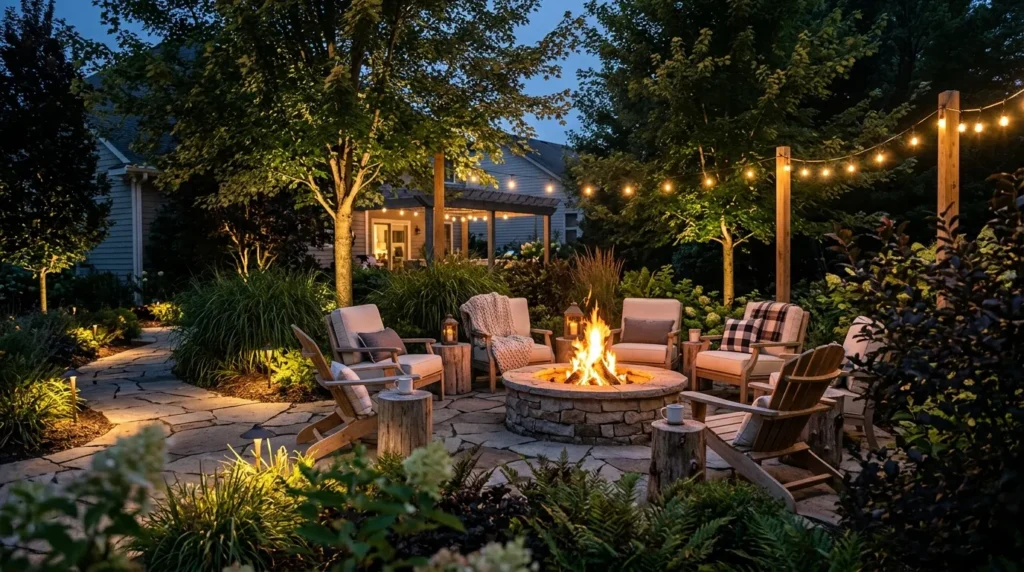
Once the sun goes down, lighting becomes one of the most important design elements in a fire pit area. The fire itself provides a natural focal point, but additional illumination helps people navigate the surrounding space and creates depth. Resort-style outdoor spaces rarely rely on one harsh overhead light. Instead, they combine several softer sources. The same principle works beautifully around a backyard fire pit. Warm pathway lights, subtle tree illumination, lanterns, and low-level patio lighting can make the entire gathering area feel more comfortable without overpowering the glow of the fire.
How To Style It
Begin with practical illumination along paths, steps, and entrances. Then add low-level accent lighting around planting beds or architectural features.
Hang weather-rated string lights above a seating area if the installation is appropriate, or use portable outdoor lanterns on tables.
Choose warm-toned lighting and avoid placing bright fixtures directly in people’s eyes.
Keep cords, fixtures, and electrical connections appropriate for outdoor use and installed according to safety requirements. The goal is to illuminate the surroundings while allowing the fire to remain the visual centerpiece.
Frequently Asked Questions
What is the safest material for a DIY fire pit?
Use materials specifically designed or rated for fire pit construction, such as appropriate fire-rated masonry products or components approved by the manufacturer. Not every concrete block, brick, rock, or landscape stone is suitable for high heat. Materials can crack or fail when exposed to temperatures they weren’t designed to withstand, so check product specifications before building.
How far should a fire pit be from a house?
The required distance varies according to local fire codes, the type of fire pit, fuel source, and property conditions. Many jurisdictions have specific minimum clearance requirements from structures, fences, vegetation, and combustible materials. Always check local regulations before installation and follow the fire pit manufacturer’s instructions.
Can I build a fire pit on grass?
A fire pit should not simply be placed directly on grass without considering heat, sparks, stability, and local requirements. A properly prepared noncombustible surface is generally more appropriate. Gravel, pavers, or another suitable surface can create a defined gathering zone while reducing risks associated with dry vegetation.
What should I put around a backyard fire pit?
Common choices include gravel, concrete pavers, natural stone, brick, or other appropriate noncombustible hardscaping. Comfortable weather-resistant chairs or benches can then be arranged outside the required safety zone. Keep dry leaves, mulch, firewood, cushions, and other combustible materials away from the active fire area.
How can I make a fire pit area family-friendly?
Focus on safety, comfortable seating, clear walkways, good visibility, and easy access. Choose seating that works for adults and children, keep hot surfaces and flames appropriately separated from traffic areas, and establish simple rules for using the fire. Store firewood and accessories away from the active fire area and never leave a fire unattended.
Is a gas or wood-burning fire pit better?
Neither option is universally best. Wood-burning pits provide traditional flames and the experience of tending a fire, while gas models can offer convenient operation and easier cleanup. Local regulations, available fuel, maintenance preferences, installation requirements, and intended use should all influence the choice.
What is the best shape for a family fire pit?
Round fire pits are especially good for conversation because everyone can face the center. Square and rectangular designs can work well with modern patios and linear seating. The best shape ultimately depends on your yard’s layout, the seating arrangement, and the type of fire feature you choose.
Conclusion
A backyard fire pit can become one of the most memorable parts of an outdoor living space. The appeal isn’t just the fire itself. It’s the way the feature encourages people to sit together, slow down, share a meal, and enjoy time outdoors.
When planning your own gathering area, start with safety and location. Check local regulations, required clearances, fuel requirements, and HOA restrictions before purchasing materials or beginning construction. Once those practical details are settled, think about how your family will actually use the space.
Choose comfortable seating, create a stable noncombustible surface, and leave enough room for people to move around naturally. Then add personality through stone, brick, wood, gravel, lighting, and greenery that complement your existing landscape.
You don’t need to build the most elaborate fire pit in the neighborhood. A simple, thoughtfully designed gathering area can be far more enjoyable than an expensive feature that doesn’t fit the way you live.
Start with one clear idea and build the surrounding space around it. Whether you prefer rustic stone, modern concrete, warm brick, or a compact fire table, the goal is the same: create a safe and comfortable outdoor destination where family and friends can gather long after dinner is over.
Related Articles
- 10 Backyard Landscape Design Ideas That Feel Like a Resort
- 11 Cozy Outdoor Living Room Ideas for Family Gatherings
- 10 Patio Lighting Ideas for Beautiful Outdoor Evenings
- 11 Backyard Privacy Ideas for a More Peaceful Retreat
- 10 Modern Patio Decorating Ideas for Stylish Outdoor Living