
10 French Style Kitchen Ideas with Beautiful Cabinet Details
Every time I walk into a French kitchen, whether it’s a tiny Paris apartment or a farmhouse in Provence, I feel the same thing. The room is calm, lived-in, and quietly beautiful. Nothing shouts, yet every detail has been thought through, from the curve of a cabinet molding to the patina on a brass knob.
If you’ve been saving French style kitchen ideas on Pinterest but can’t figure out how to bring them home without a full renovation, you’re not alone. A mistake many homeowners make is copying one big feature, like a pricey range, and ignoring the small details that actually create that soft, collected look. In my experience, French kitchens work because of layers: painted cabinetry with real dimension, honest materials like marble and wood, and lighting that feels warm instead of clinical.
The good news is that you don’t need a château budget. Many of the ideas below can be done in a weekend with paint, new hardware, or a few thoughtful swaps. Others are worth planning if you’re remodeling, and I’ll point out which is which so you can decide what fits your home, whether you own or rent.
In this guide, I’m walking you through ten cabinet-focused, detail-driven ideas. Each one explains why it works and how to style it in a real kitchen. You’ll see what materials to look for, how to adapt each idea to a small space, and how to mix them without making the room feel like a theme park.
Think of this as a menu. Pick two or three ideas that speak to you, start there, and let the kitchen evolve. By the end, you’ll have a clear plan for a space that feels elegant, welcoming, and genuinely easy to cook in.
Table of Contents
- Beaded Inset Cabinets
Learn how a tiny rounded edge creates the custom, furniture-style look French kitchens are known for. - Soft Sage Paint
Discover why muted green cabinetry feels both historic and fresh. - Glass Front Uppers
See how display-ready cabinets add depth, light, and personality. - Antique Brass Hardware
Find out how small metal details can transform plain cabinet doors. - Farmhouse Apron Sink
Understand why a deep front-facing sink anchors the whole room. - Open Plank Shelving
Explore how simple wood shelves soften a wall of cabinets. - Marble Slab Counters
Get practical advice for choosing and living with natural stone. - Range Hood Surround
See how a plastered or paneled hood becomes the kitchen’s focal point. - Checkerboard Tile Floor
Learn how a classic pattern adds movement without clutter. - Vintage Pendant Lighting
Discover how warm, antique-style fixtures finish the look.
1. Beaded Inset Cabinets

Quick Benefits
- Creates a custom, furniture-like look
- Adds soft shadow lines and dimension
- Feels timeless rather than trendy
- Works with simple door profiles
- Adds long-term resale appeal
Why It Works
Walk into any classic French kitchen and your eyes land on the cabinet doors first. Beaded inset cabinets sit flush inside the frame, with a small rounded bead running along the edge of the opening. That tiny detail casts a soft shadow line that makes the whole wall of cabinetry look custom and furniture-like. In my experience, it’s the single feature that separates a kitchen that looks “French-inspired” from one that truly feels collected over time. Inset doors also have a tailored, precise appearance that feels timeless rather than trendy. Even a simple door profile looks richer when the beading frames it, which is why designers keep returning to this style for kitchens meant to last decades.
How To Style It
If a full remodel isn’t in the plan, you can imitate the effect by adding thin bead molding to the face frames of existing cabinets. Paint cabinets and molding in one color so the detail reads as built in. For new cabinetry, ask your cabinetmaker for full inset doors with a quarter-round bead and exposed hinges in aged brass or black iron. Pair them with butcher block or honed marble counters to keep the mood soft. Keep upper cabinets slightly shorter than usual, leaving breathing room above for a stack of plates or a trailing plant. Cream, warm white, or dove gray lets the shadow lines do the talking.
2. Soft Sage Paint

Quick Benefits
- Feels calming and nature-inspired
- Pairs well with brass, wood, and marble
- Hides everyday smudges better than white
- Brightens without feeling stark
- Easy to repaint if tastes change
Why It Works
Picture a kitchen the color of a garden herb after rain: gray-green, muted, and a little dusty. That’s soft sage, and it’s one of the most beloved cabinet colors in French interiors for good reason. It reads as neutral but carries more warmth and depth than white or beige. I’ve noticed it also looks different through the day, leaning silvery in morning light and richer by evening. Because the tone is soft rather than bold, it works with nearly every countertop and metal finish. It also gives a kitchen personality without overwhelming a small room, which makes it a safe and stylish choice for first-time color users.
How To Style It
Start by testing three sample colors on a large board and checking them morning, noon, and night. Choose a satin or eggshell finish so the surface looks soft but wipes clean easily. Pair sage cabinets with warm white walls, unlacquered brass hardware, and a honed white or cream countertop. Add wooden cutting boards, linen towels, and a ceramic crock of wooden spoons to echo the palette. If you’re renting, consider painting only the island or a single run of lower cabinets, then restoring the original color before you move out.
3. Glass Front Uppers

Quick Benefits
- Makes cabinets feel lighter
- Lets you display favorite dishes
- Bounces light around the room
- Breaks up heavy walls of cabinetry
- Adds an instant collected feel
Why It Works
A solid wall of upper cabinets can feel heavy, especially in a smaller kitchen. Glass-front doors lighten the load immediately. You get a glimpse of white plates, glassware, and pretty bowls, and the reflections add a sparkle that solid doors simply can’t. One thing that works especially well is mixing just two or three glass-front cabinets with solid ones, so you still have closed storage for everyday clutter. French kitchens have always treated dishes as decor, and this idea carries that tradition forward in a practical way. It also encourages you to curate what you own, which makes the whole room feel more intentional and calm.
How To Style It
Choose divided-light doors with thin muntins for a classic look, or seeded glass if you’d rather soften what’s inside. Install small battery-operated or hardwired LED strips inside the cabinet at the top front edge, so the dishes glow at night. Stick to a cohesive palette like white ironstone, clear glass, and a few cream pitchers. Group items by height, with stacks on the lower shelves and taller pieces behind. Line the back panel with beadboard or a soft linen-toned paper for subtle texture. Avoid overfilling, since a little empty space makes the display look special.
4. Antique Brass Hardware
Quick Benefits
- Instantly upgrades plain cabinets
- Develops a lovely patina over time
- Budget-friendly weekend project
- Warms up cool paint colors
- Easy for renters to swap and reverse
Why It Works
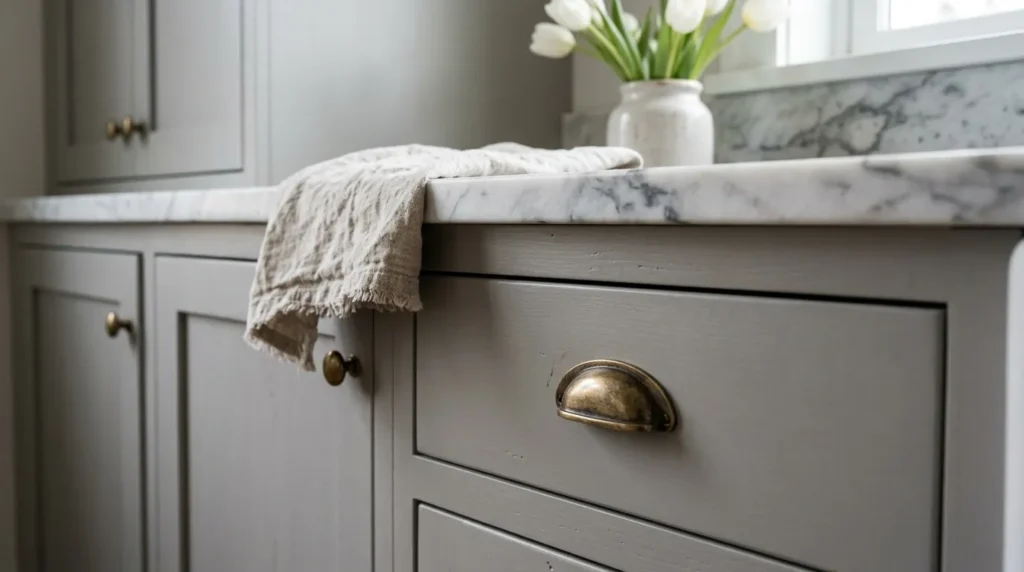
Hardware is the jewelry of the kitchen, and French style favors pieces with a bit of history. Antique or unlacquered brass has a warm, slightly worn glow that makes new cabinets look as though they’ve been loved for years. It also ages beautifully, darkening where hands touch it most. I’ve seen this idea transform a builder-grade kitchen for under a few hundred dollars. The metal’s soft golden tone warms up gray, sage, and cream paint, and it plays nicely with marble and wood. Because hardware is one of the first things people notice when they open a door, even small upgrades feel luxurious and deliberate.
How To Style It
Mix knobs on doors with simple bar pulls or cup pulls on drawers, keeping the finish consistent. Measure your existing hole spacing before ordering so installation takes minutes rather than hours. Choose slightly oversized pieces on larger drawers for a custom look. If you’re renting, keep the original hardware in a labeled bag and swap it back at move-out. Echo the brass in a faucet, a pendant light, or a few picture frames so the metal feels intentional. Wipe gently with a soft cloth, and let the patina develop naturally if you love the lived-in effect.
5. Farmhouse Apron Sink

Quick Benefits
- Deep basin handles large pots easily
- Creates a strong focal point
- Reduces counter splashing
- Fits traditional and casual kitchens
- Durable in fireclay or porcelain
Why It Works
There’s a reason the apron-front sink shows up in nearly every French country kitchen. Its deep basin makes scrubbing roasting pans and stockpots easier, and the exposed front panel gives the cabinet run a charming, utilitarian focal point. A mistake many homeowners make is choosing a sink purely for looks without thinking about daily use. Fireclay and porcelain offer a good balance, being durable, easy to clean, and classically beautiful in a creamy white finish. When surrounded by painted cabinets and a simple countertop, the sink reads as a feature rather than a fixture, which is exactly the relaxed French feel you’re after.
How To Style It
Choose a single-bowl model about 30 to 33 inches wide for the most flexibility, and confirm your cabinet base can support the weight. Pair it with a bridge faucet in brass or polished nickel for a classic French look. Keep the surrounding countertop clear except for a small tray holding dish soap in a glass pump bottle and a natural bristle brush. Hang a linen towel from the cabinet door beside it. If a new sink isn’t possible, add a small apron-style front panel to your existing cabinet for a similar, budget-friendly effect.
Article 1 ka Part 2 yeh raha.
6. Open Plank Shelving

Quick Benefits
- Breaks up heavy walls of cabinetry
- Keeps everyday items within easy reach
- Adds natural wood warmth
- Budget-friendly compared to cabinets
- Easy to restyle with the seasons
Why It Works
Even the prettiest cabinetry can feel formal when it fills every wall. Open plank shelving breaks that rhythm. A single thick wooden board on simple iron or wood brackets adds a relaxed, café-style charm that French kitchens do beautifully. In my experience, it also makes cooking easier, since the oils, salt, and favorite bowls you reach for daily sit right where your hands expect them. Visually, the grain of the wood softens painted surfaces and connects the room to nature. It’s also one of the most affordable ideas on this list, because a few boards and brackets cost far less than another run of cabinets.
How To Style It
Look for solid oak, walnut, or reclaimed pine about 1.5 inches thick and 10 to 12 inches deep, so the shelf feels substantial rather than flimsy. Mount it into wall studs with brackets that match your cabinet hardware. Keep the styling edited: stacked white plates, a marble mortar, cutting boards leaning at the back, and a small pot of fresh herbs. Leave about a third of the shelf empty for breathing room. If you’re renting, try a freestanding wooden rack beside the stove, or use removable anchors and heavy-duty brackets for a lighter display.
7. Marble Slab Counters

Quick Benefits
- Brings soft veining and natural beauty
- Stays cool for baking and pastry work
- Makes painted cabinets look richer
- Develops a charming patina over time
- Adds lasting value to the kitchen
Why It Works
Few materials say “French kitchen” like marble. Its soft veining and cool surface have lined pastry counters in Paris for generations, and there’s a practical reason: marble stays cool, which bakers love for rolling dough. Beyond function, it brings a gentle, luminous quality that makes painted cabinets look richer. One thing worth knowing is that marble develops character, with faint rings and etches that many people come to love as part of its story. I’ve noticed that homeowners who embrace that patina are the happiest with it. If you want a flawless surface forever, marble may not be the right fit, and that’s perfectly okay.
How To Style It
Choose a honed finish instead of polished, since it hides etching better and feels softer to the touch. Look for gentle, linear veining in gray or warm cream, and have the slab sealed at installation, then re-sealed about once a year. Use cutting boards and trivets, and wipe up wine, lemon juice, and tomato sauce quickly. Pair the stone with painted cabinets and brass hardware. If marble feels risky, quartzite or a marble-look quartz offers a similar look with less upkeep. A single marble slab on just the island or a baking station is another budget-friendly compromise.
8. Range Hood Surround
Quick Benefits
- Creates a strong kitchen focal point
- Draws the eye upward
- Softens stainless steel appliances
- Adds architectural character
- Pulls cabinets and walls together
Why It Works
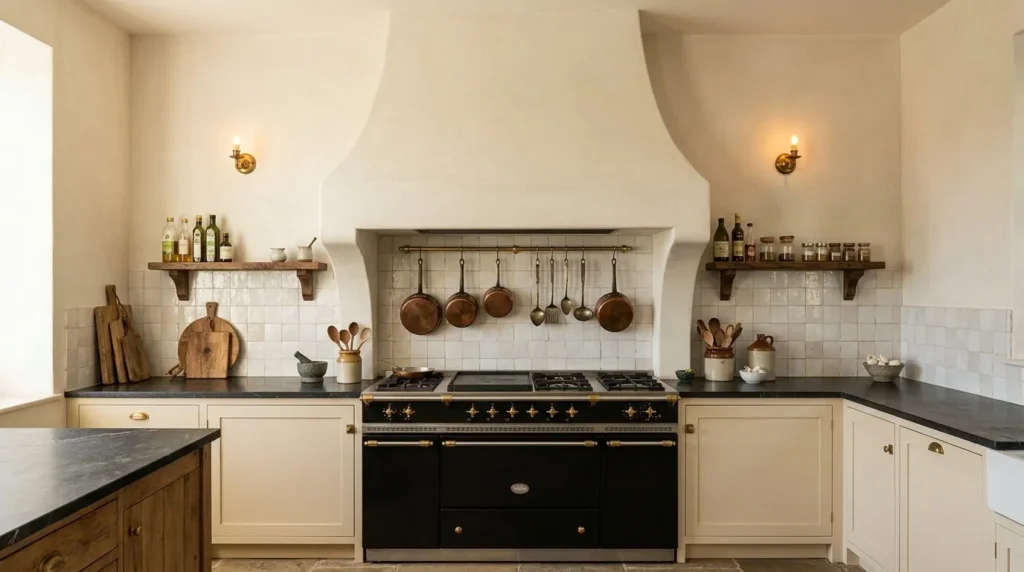
Every kitchen needs a focal point, and in French design it’s often the cooking wall. A custom range hood surround, whether plastered, paneled, or wrapped in painted wood, turns a purely functional appliance into architecture. The gentle taper or curve draws the eye upward, making ceilings feel taller and the room more refined without feeling stiff. A mistake many homeowners make is leaving the hood as bare stainless steel, which can feel cold next to soft cabinetry. Covering it with texture and color ties the whole room together and gives the stove area a sense of occasion.
How To Style It
Have a carpenter build a surround around a standard hood insert, finished in plaster, limewash, or tongue-and-groove paneling. Match the color to your cabinets, or go slightly lighter so the hood seems to glow. Add a simple trim band at the base and a few brass details if you like. Flank the range with a small shelf or niche for oils and spices. Keep the backsplash simple, such as white zellige or classic subway tile, so the hood stays the star. Always follow the manufacturer’s clearance guidelines and local building codes around the cooktop.
9. Checkerboard Tile Floor

Quick Benefits
- Adds movement without extra clutter
- Makes small kitchens feel wider
- Durable and easy to clean
- Works with simple walls and cabinets
- Timeless, graphic, and photogenic
Why It Works
Few floors carry as much quiet charm as a checkerboard. The pattern is a French kitchen classic, adding a graphic pulse beneath all that softness. It also makes a small kitchen feel wider, especially when laid on the diagonal, because the lines lead the eye across the room. I’ve seen it turn a plain galley kitchen into the most photographed room in the house. Because the floor is already doing the talking, you can keep cabinets and walls beautifully simple. It’s practical too, since durable tile handles spills, foot traffic, and pets with ease, which keeps the look polished in a real, busy home.
How To Style It
Choose 12-inch square porcelain or natural stone tiles, laid straight for a calm look or on the diagonal for more energy. For a softer feel, try cream and warm gray or tan and white instead of stark black and white. Use grout close to the lighter tile color so the pattern stays crisp but not harsh. Add a faded wool or cotton runner in front of the sink for comfort. If you’re renting, peel-and-stick vinyl checkerboard tiles are a surprisingly good temporary option that can be removed at move-out.
10. Vintage Pendant Lighting
Quick Benefits
- Adds warm, welcoming glow
- Finishes the look with personality
- Defines the island or dining nook
- Easy to swap in a weekend
- Pairs beautifully with brass and wood
Why It Works
Lighting is the finishing touch that makes a kitchen feel lived in. Vintage-style pendants, such as milk glass domes, schoolhouse shades, or aged brass lanterns, cast a soft, golden light that flatters wood, marble, and painted cabinets alike. Harsh, cool bulbs can make even a beautiful kitchen feel clinical, which is why designers often recommend warm tones in this room. Pendants also add a layer of height and visual interest above the island, and they define the spot where friends naturally gather. In the evening, that glow is what makes a French kitchen feel like an invitation to stay.
How To Style It
Hang pendants so the bottom sits about 30 to 36 inches above the countertop, and space them evenly over your island. For a typical island, two or three fixtures usually work well. Choose warm white bulbs around 2700K, and add a dimmer so you can set the mood from morning coffee to late dinner. Match the metal to your hardware and faucet. If you’re renting, a plug-in swag pendant hung from a ceiling hook offers a no-wiring alternative. Add small under-cabinet lights to keep work surfaces bright.
Conclusion
A truly beautiful kitchen isn’t built in a day, and the best French spaces never look like they were. They feel gathered over time, with cabinet details that catch the light, honest materials that age gracefully, and a few thoughtful touches that make the room feel like home.
Looking back at these ten ideas, a few themes stand out. Details matter more than size, and a small bead on a cabinet door or a handful of brass knobs can change the entire mood. Natural materials like marble, wood, and fireclay bring warmth and character that synthetic finishes struggle to match. And soft, layered color, from sage cabinets to creamy tile, keeps the room calm and welcoming.
The best French style kitchen ideas also respect real life. Choose what suits how you cook, how much upkeep you enjoy, and what you can afford right now. Renters can lean on paint, hardware, lighting, and peel-and-stick flooring, while homeowners planning a remodel can invest in inset cabinets, stone counters, and a custom hood.
If it all feels like a lot, don’t worry. Start with one or two ideas and gradually build a space that reflects your style and supports everyday comfort. Swap the hardware this weekend, try a sample of sage paint next month, and add a shelf or a pendant when the budget allows. Little by little, your kitchen will start to feel like the one you’ve been saving on Pinterest.
When you do, save this guide so you can come back to it as the project grows. Your future self, standing in a warm, beautiful kitchen, will be glad you started.
Related Articles
- Blue Gray Kitchen Cabinet Ideas
- Modern Farmhouse Kitchen Decor
- Small Kitchen Storage Solutions
- Cottage Kitchen Color Palettes
- DIY Kitchen Cabinet Makeover Ideas
FAQ
1. What makes a kitchen look French style?
A French style kitchen usually combines painted cabinetry with detailed moldings, natural materials like marble and wood, and warm metals such as brass. Soft colors, open shelving, a deep apron sink, and vintage lighting complete the look. The overall feel is relaxed, layered, and lived-in rather than perfectly matched or overly modern.
2. What colors work best for French kitchen cabinets?
Soft, muted shades are the most popular choice. Sage green, dove gray, cream, warm white, and pale blue-gray all feel authentic and calming. These colors pair well with brass hardware and marble counters. Always test samples in your own light, since natural and artificial light can change how each color looks throughout the day.
3. Can I get a French kitchen look on a small budget?
Yes. Painting your cabinets, swapping in antique brass hardware, adding a wooden shelf, and installing a vintage-style pendant make a big difference for little money. Peel-and-stick checkerboard tiles also work for floors. Focus on the visible details first, then upgrade larger items like counters and sinks when you can.
4. Is marble a good choice for kitchen counters?
Marble is beautiful and stays cool, which bakers love, but it is softer and more porous than quartz or granite. It can etch and stain, so sealing and wiping spills quickly are important. If you love a lived-in look, it’s wonderful. If you want a flawless surface, consider quartzite or marble-look quartz instead.
5. What are beaded inset cabinets?
Beaded inset cabinets have doors that sit flush inside the cabinet frame, with a small rounded bead molding around the opening. This creates shadow lines and a custom, furniture-style appearance. They typically cost more than standard overlay cabinets because of the precise construction, but many people consider them a timeless investment for a long-lasting kitchen.
6. Can renters create a French style kitchen?
Absolutely. Renters can swap cabinet hardware and keep the originals for move-out, paint an island or lower cabinets with landlord approval, use plug-in pendants, and lay peel-and-stick tile. Add linen towels, wooden cutting boards, and ironstone dishes to complete the feel without making permanent changes to the space.