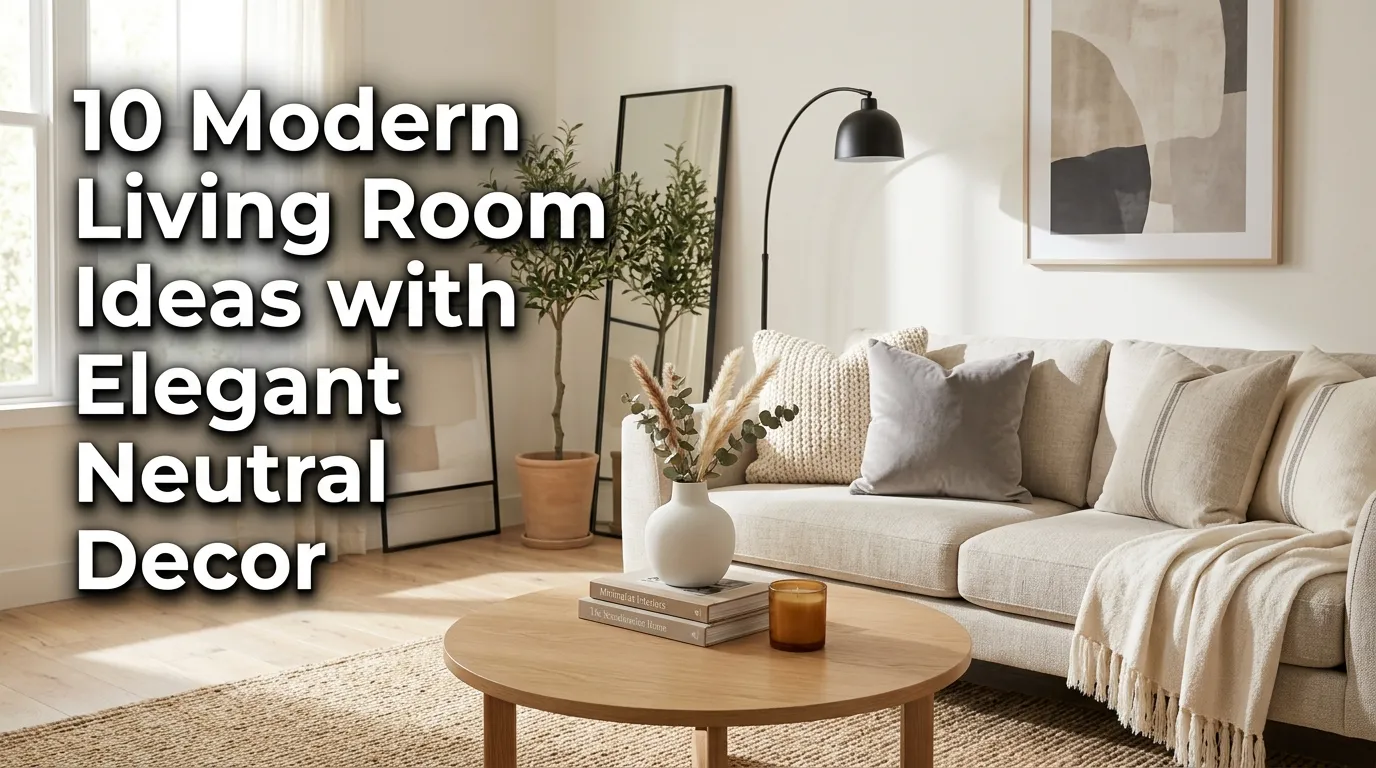
10 Modern Living Room Ideas with Elegant Neutral Decor
Modern living rooms can be sleek without feeling cold, and neutral decorating can be sophisticated without becoming boring. The secret is finding the balance between clean lines, comfortable materials, and subtle layers of color and texture.
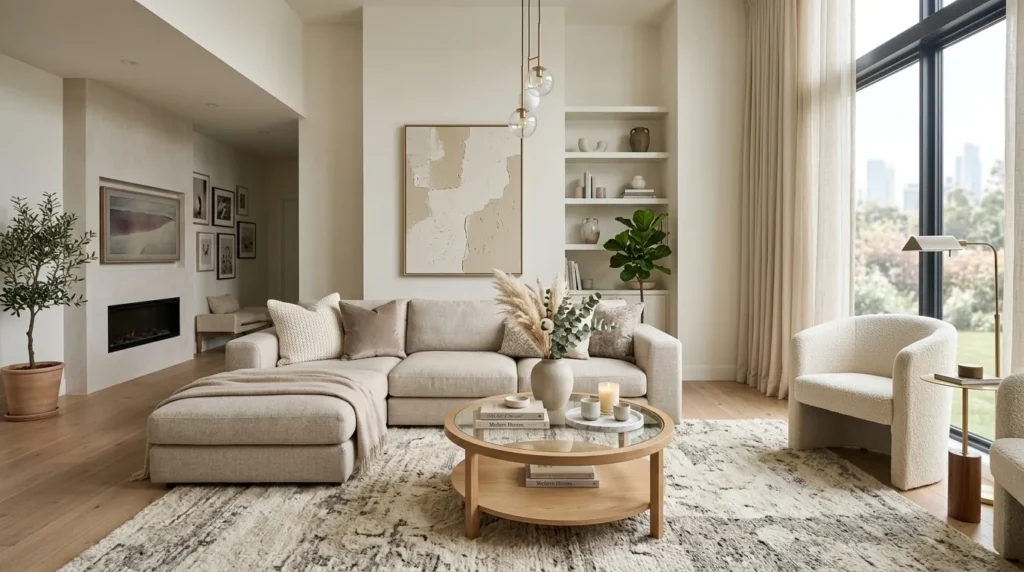
An elegant neutral palette gives you a timeless foundation, while modern furniture and thoughtful styling keep the room feeling current. Instead of relying on bold colors to create interest, you can use warm woods, natural stone, sculptural lighting, textured fabrics, and carefully chosen accessories.
In my experience, the most successful neutral living rooms aren’t completely monochromatic. They usually contain several shades of the same color family—think warm white, ivory, beige, taupe, mushroom, and soft brown—combined with different textures. This creates depth while keeping the overall look calm.
Modern style also doesn’t mean filling the room with furniture. A few well-proportioned pieces can have much more impact than a crowded arrangement. Start with a comfortable sofa, establish a strong focal point, and then layer in pieces that serve a purpose.
Whether you’re refreshing an existing living room, decorating a new home, or simply looking for inspiration before your next furniture purchase, these ideas will help you create a polished space that feels both elevated and genuinely livable.
The goal isn’t to create a showroom. It’s to build a room that looks refined in photographs but still feels comfortable enough for everyday coffee, movie nights, conversations, and quiet afternoons.
Table of Contents
1. Warm Ivory Foundation
Create an elegant base with layered warm neutrals.
2. Sculptural Furniture
Use simple statement pieces to add modern character.
3. Natural Wood Accents
Bring warmth and organic contrast into the room.
4. Textured Neutral Sofa
Make the main seating piece feel soft and sophisticated.
5. Statement Lighting
Use sculptural lighting to create a memorable focal point.
6. Minimalist Art
Add personality without overwhelming the palette.
7. Stone Coffee Table
Introduce a refined architectural element.
8. Layered Window Treatments
Soften windows while maintaining a polished appearance.
9. Neutral Layered Textiles
Build warmth through subtle variations in texture.
10. Curated Open Shelving
Display meaningful pieces without visual clutter.
1. Warm Ivory Foundation
Quick Benefits
- Creates a timeless backdrop
- Makes the room feel brighter
- Works with modern furniture
- Allows textures to stand out
- Makes future updates easier
Why It Works
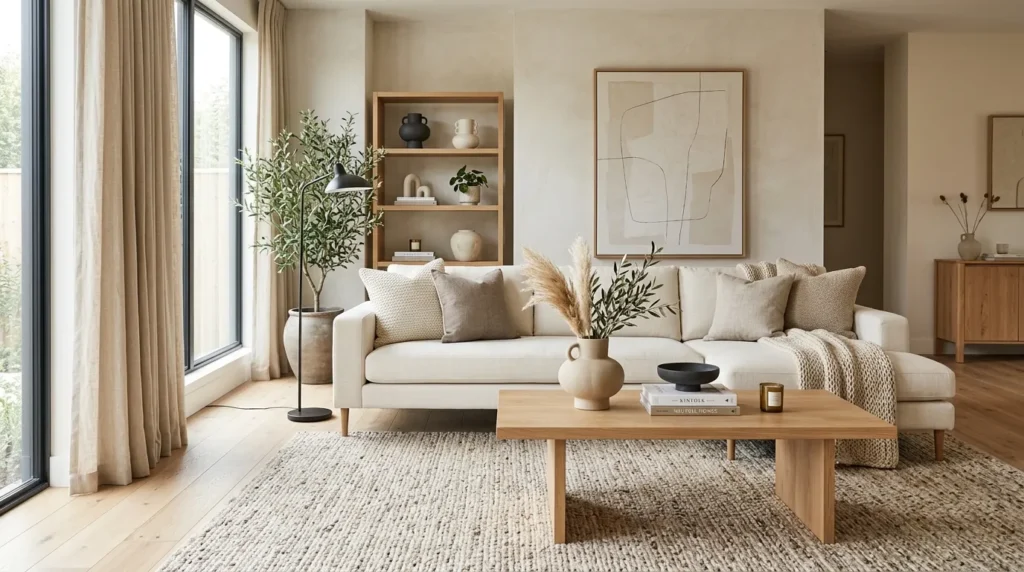
Warm ivory is one of the easiest ways to create an elegant modern foundation without making a living room feel stark. Unlike a very bright white, ivory has enough warmth to complement wood, stone, brass, linen, and natural fibers.
The beauty is in the layering. Rather than using one exact shade throughout the room, combine ivory with cream, beige, taupe, and soft mushroom tones.
This subtle variation gives a neutral space dimension.
I’ve noticed that warm neutrals also make modern furniture feel more approachable. Clean-lined pieces can sometimes appear severe against cool white walls, but a warmer backdrop softens those edges.
How To Style It
Start with warm ivory walls or large architectural surfaces if you’re able to paint.
Then introduce cream upholstery, beige curtains, and a slightly deeper taupe rug.
Use natural wood furniture to add warmth.
For contrast, incorporate small touches of charcoal, dark brown, or aged brass through lighting, frames, and accessories.
Keep the palette restrained so the room feels cohesive rather than busy.
2. Sculptural Furniture
Quick Benefits
- Adds modern personality
- Creates visual interest
- Makes neutral rooms feel sophisticated
- Provides memorable silhouettes
- Reduces the need for excessive accessories
Why It Works
When color is intentionally restrained, furniture shape becomes much more important.
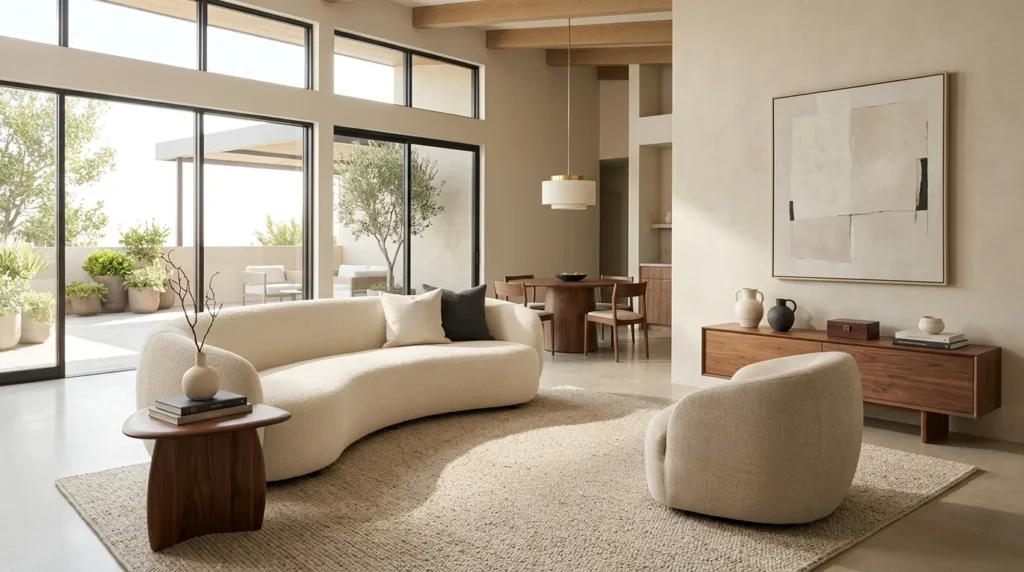
A curved sofa, rounded chair, sculptural side table, or organically shaped console can become a visual feature without introducing another strong color.
This is one of my favorite ways to keep a neutral room interesting.
Instead of asking accessories to do all the decorating, let the furniture itself contribute to the design.
Curves can also soften a room dominated by straight architectural lines, creating a more relaxed and contemporary feeling.
How To Style It
Choose one or two sculptural pieces rather than turning every item into a statement.
A curved cream sofa can work beautifully with a simple rectangular rug and linear console.
Alternatively, use a sculptural lounge chair beside a streamlined sofa.
Keep the surrounding accessories relatively simple so the furniture silhouette remains visible.
Natural fabrics and matte finishes generally work beautifully with this approach.
3. Natural Wood Accents
Quick Benefits
- Adds warmth
- Prevents a neutral room from feeling flat
- Introduces organic texture
- Works with modern furniture
- Creates visual balance
Why It Works
A completely neutral room can sometimes feel visually cool, especially when it contains many white, gray, or stone surfaces.
Natural wood solves this beautifully.
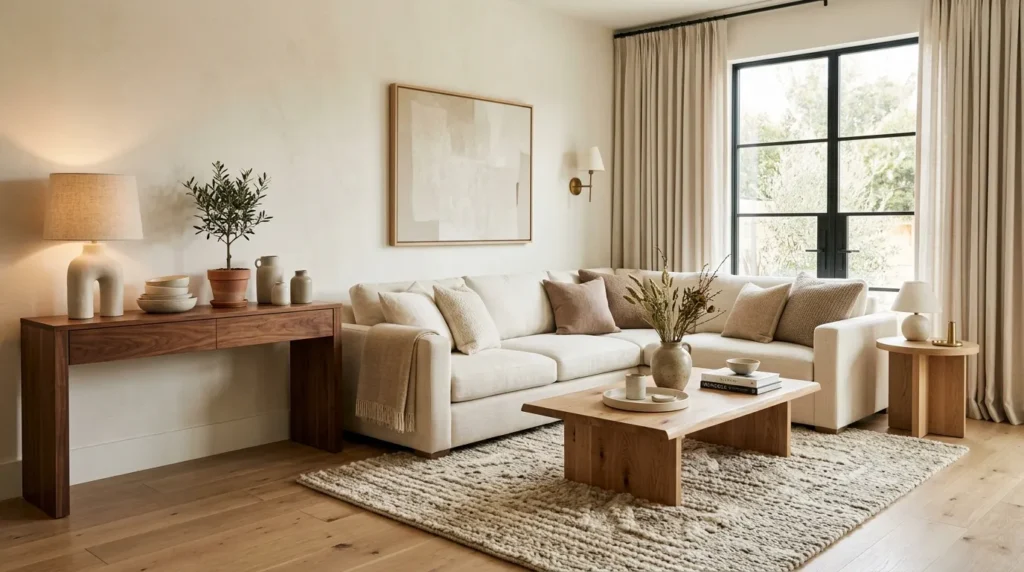
The warmth of oak, walnut, ash, or other suitable wood tones creates contrast while remaining within a sophisticated neutral palette.
Wood also brings an organic quality that makes modern interiors feel more relaxed.
How To Style It
Use wood strategically rather than covering the room in matching furniture.
A light oak coffee table, walnut console, or wooden side table may be enough.
You can repeat the wood tone in a picture frame, decorative bowl, or shelving detail.
If your room already has dark floors, lighter wood can provide contrast.
For warm beige interiors, medium oak and walnut often create particularly rich combinations.
4. Textured Neutral Sofa
Quick Benefits
- Creates a comfortable focal point
- Adds softness
- Gives neutrals more depth
- Works with many styles
- Provides a timeless foundation
Why It Works
The sofa is often the visual and functional center of a living room, so it deserves more attention than simply choosing a color you like.
A neutral sofa becomes much more interesting when the upholstery has visible texture.
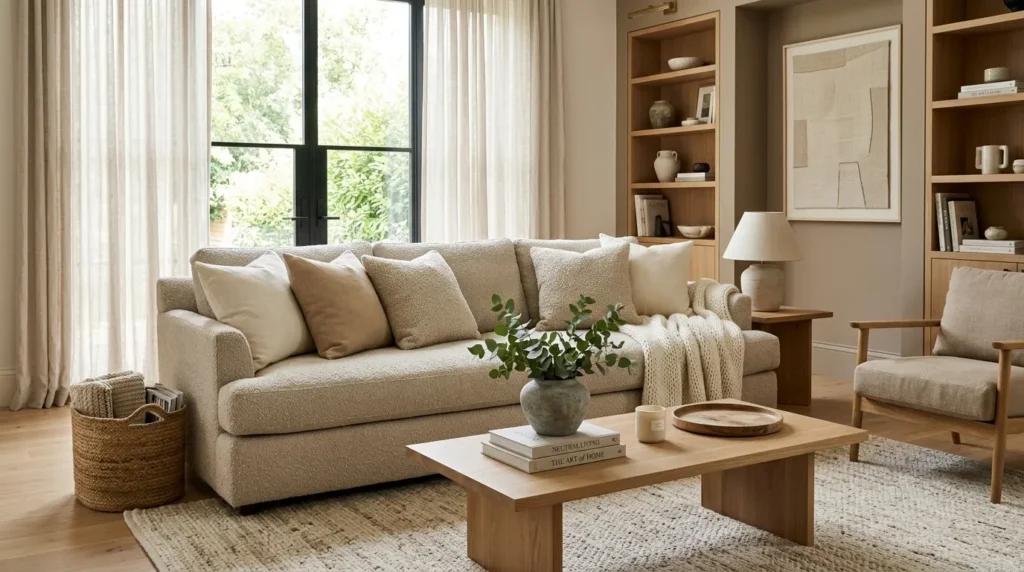
Bouclé, linen-look fabric, cotton blends, performance upholstery, and other tactile materials can add depth without changing the color palette.
A mistake many homeowners make is using smooth surfaces everywhere and then wondering why a neutral room feels flat.
Texture gives the eye something to explore.
How To Style It
Choose a sofa in cream, oatmeal, warm beige, taupe, or mushroom.
Layer cushions in slightly different neutral shades and materials.
Add one soft throw for a relaxed touch.
Pair the sofa with a textured rug and a contrasting wood or stone coffee table.
If you have children or pets, prioritize upholstery designed for everyday use rather than choosing fabric based only on appearance.
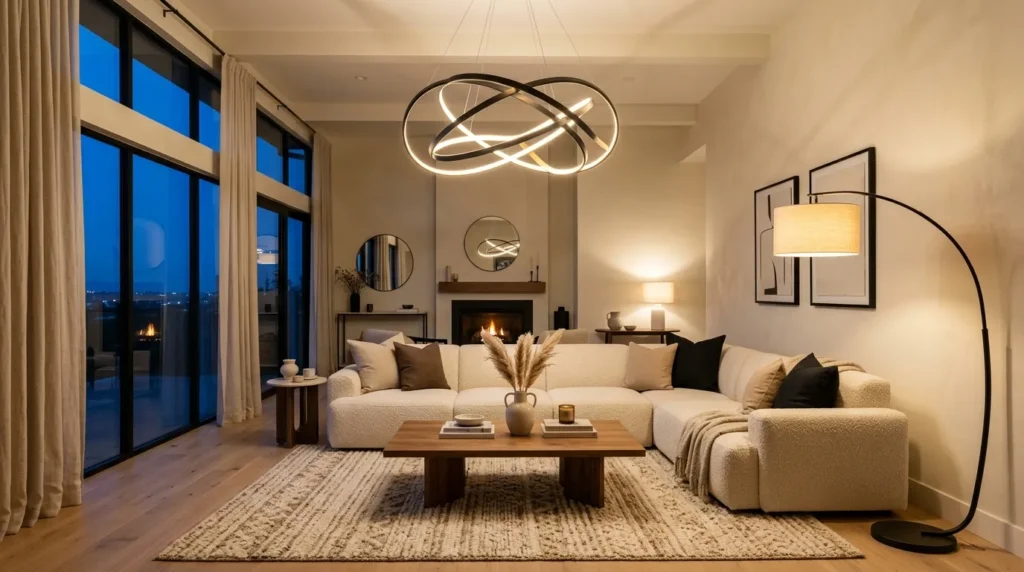
5. Statement Lighting
Quick Benefits
- Adds architectural interest
- Creates a focal point
- Improves ambiance
- Works beautifully with neutral palettes
- Adds personality without bold color
Why It Works
Lighting becomes especially important in neutral interiors because it can add shape, contrast, and atmosphere.
A sculptural pendant or oversized floor lamp can act almost like artwork.
Even when the light isn’t being used, its silhouette contributes to the room’s overall design.
Layered lighting also prevents the room from depending entirely on one bright overhead fixture.
How To Style It
Choose one standout fixture with a strong silhouette.
A sculptural pendant works beautifully over a central seating area when ceiling height and room layout allow.
For a more flexible option, use an oversized floor lamp beside the sofa.
Add smaller table or accent lamps throughout the room.
Use warm, comfortable lighting for evening ambiance while ensuring task areas receive adequate illumination.
6. Minimalist Art
Quick Benefits
- Adds personality
- Breaks up neutral walls
- Creates a sophisticated focal point
- Maintains visual calm
- Allows the room to feel personal
Why It Works
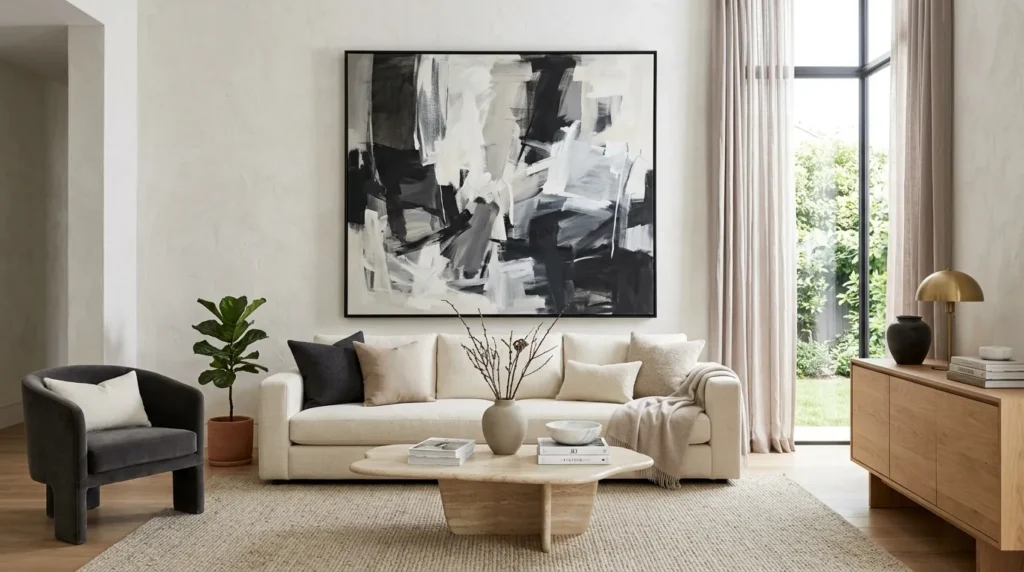
Minimalist art works beautifully with neutral interiors because it adds character without overwhelming the palette.
A large abstract print, monochromatic artwork, architectural photography, or simple textured canvas can provide the contrast needed to make a neutral wall feel intentional.
You don’t need dozens of small frames.
One oversized piece can often have greater impact than a gallery wall filled with competing images.
How To Style It
Choose artwork that contains colors already present in the room.
For example, a cream, charcoal, taupe, and warm brown abstract piece can connect the sofa, rug, wood furniture, and accessories.
Hang large artwork at a comfortable viewing height.
If placing art above a sofa, select a size that visually relates to the sofa rather than choosing a very small piece.
Keep surrounding accessories restrained.
7. Stone Coffee Table
Quick Benefits
- Adds sophisticated contrast
- Creates a strong centerpiece
- Works with warm neutrals
- Introduces natural texture
- Feels architectural
Why It Works
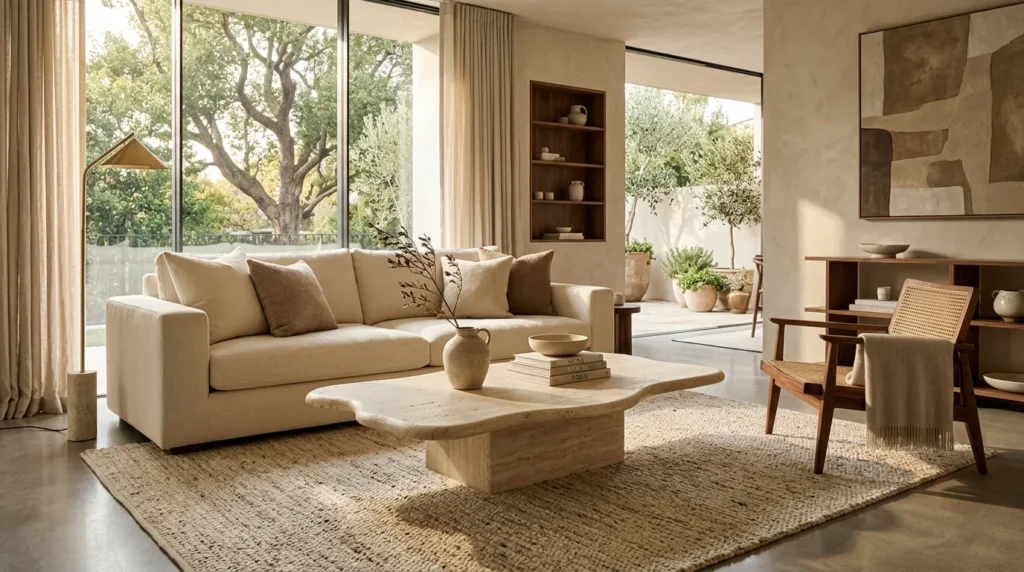
Stone brings an understated sense of luxury to a modern living room.
Travertine-inspired finishes, limestone tones, marble, and other natural or suitable stone surfaces can introduce subtle variation while remaining neutral.
The organic markings in stone prevent the room from feeling too uniform.
Combined with warm wood and soft upholstery, stone creates a beautiful contrast between hard and soft materials.
How To Style It
Choose a coffee table with a simple silhouette.
A rounded stone table works well with a linear sofa, while a rectangular design can complement a curved seating arrangement.
Keep the tabletop styling minimal.
A decorative tray, ceramic vessel, and one or two books may be all you need.
Allow the natural surface of the table to remain visible.
8. Layered Window Treatments
Quick Benefits
- Softens the room
- Adds privacy
- Controls natural light
- Creates visual height
- Makes the space feel finished
Why It Works
Windows are sometimes overlooked when decorating a living room, but they can occupy a significant portion of the visual field.
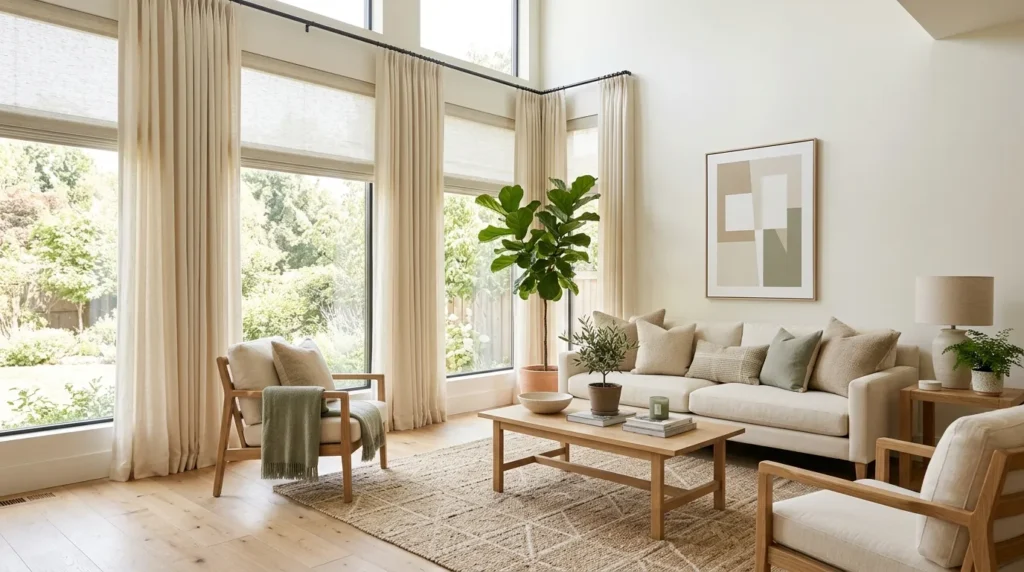
Soft neutral curtains help frame them while adding height and texture.
Layering shades or blinds beneath curtains can also provide better control over privacy and daylight.
This is particularly useful in modern spaces where the furniture may be intentionally minimal.
How To Style It
Choose curtains in ivory, warm white, flax, beige, or another color closely related to your walls.
Whenever practical, hang curtain hardware higher and wider than the window frame to create a more generous appearance.
Use simple, tailored panels rather than heavy decorative treatments.
If privacy is important, pair curtains with appropriate shades or blinds.
Keep the fabric relaxed and natural-looking rather than overly formal.
9. Neutral Layered Textiles
Quick Benefits
- Adds warmth
- Creates visual depth
- Makes the room more inviting
- Softens modern lines
- Keeps the palette cohesive
Why It Works
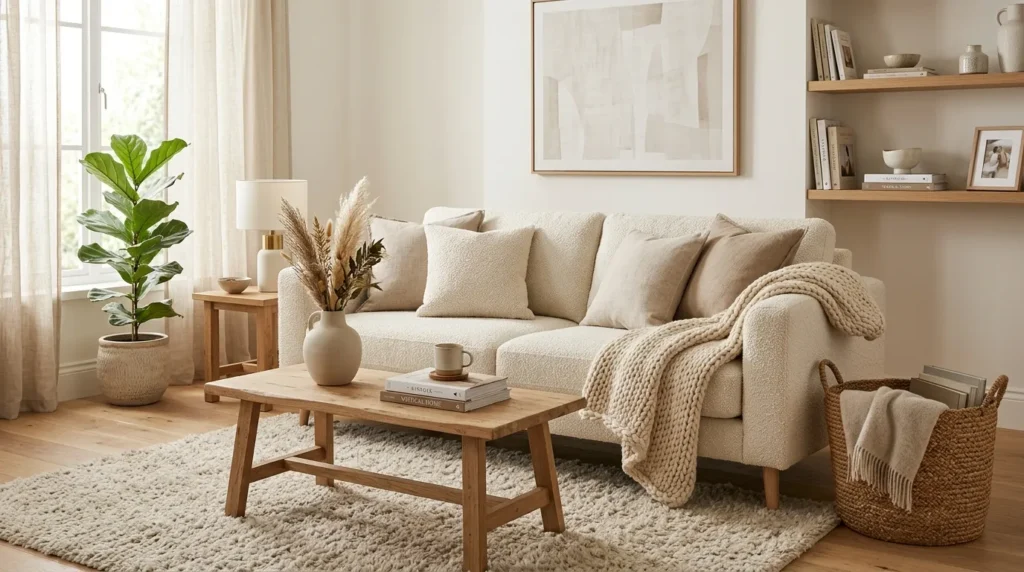
A neutral room becomes much more appealing when different textures are layered throughout it.
Think linen beside wool, woven fibers beside smooth ceramic, and soft upholstery beside natural wood.
These contrasts create interest without requiring bright colors.
This is particularly useful when you’re aiming for a modern aesthetic that still feels cozy.
How To Style It
Start with a large textured rug.
Add cushions in linen, cotton, boucle, or other complementary materials.
Place a soft throw over the sofa.
Introduce woven baskets or natural fiber accessories.
Keep most textiles within the same neutral color family, but vary the texture and scale.
The result should feel layered rather than overly decorated.
10. Curated Open Shelving
Quick Benefits
- Provides display space
- Adds vertical interest
- Shows personality
- Helps organize accessories
- Works with modern interiors
Why It Works
Modern doesn’t have to mean completely empty.
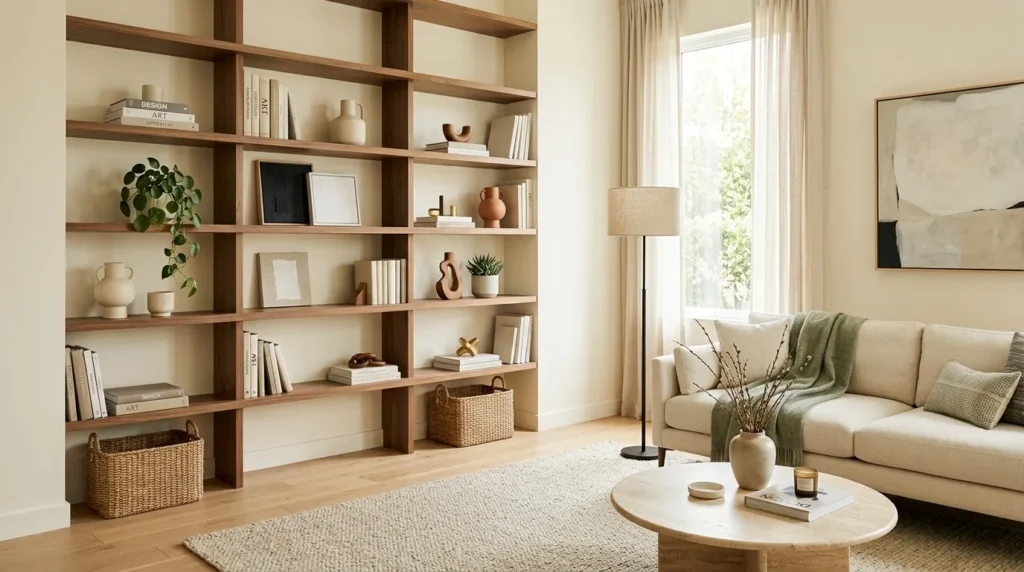
Open shelving can make a neutral living room feel personal while still maintaining a clean appearance—provided it is carefully edited.
The secret is curation.
Instead of filling every shelf, combine practical and decorative pieces with plenty of breathing room.
This creates a collected look without visual chaos.
How To Style It
Use a combination of books, ceramics, framed art, small plants, sculptural objects, and meaningful pieces.
Vary the heights and shapes of objects.
Leave some shelves partially empty.
Repeat your room’s main colors throughout the display.
Natural wood shelves can soften a contemporary room, while black or metal shelving can create stronger modern contrast.
How to Create an Elegant Neutral Living Room
Start with the largest surfaces first.
Choose the wall color, flooring, sofa, and rug before focusing on accessories.
Then build contrast through material rather than excessive color.
For example:
Soft sofa + natural wood + stone + textured rug + metal lighting
This combination creates multiple layers while keeping the color palette calm.
Next, repeat colors throughout the room. If you use warm beige in the sofa, bring that tone into the curtains or rug. If you add walnut furniture, repeat a similar wood tone in smaller accents.
The result feels cohesive because the eye recognizes recurring elements.
Best Neutral Colors for Modern Living Rooms
Not all neutrals have the same effect.
Warm White
Bright but softer than pure white.
Cream
Adds warmth and works beautifully with wood.
Beige
A versatile choice for sofas, rugs, and curtains.
Taupe
Provides slightly deeper contrast while remaining neutral.
Mushroom
Sophisticated and slightly earthy.
Greige
Combines gray and beige for a contemporary appearance.
Soft Brown
Excellent for adding warmth through wood and leather.
Muted Sage
Technically a color rather than a true neutral, but it works beautifully as a quiet accent.
The best palette usually includes several shades rather than one single neutral repeated everywhere.
Modern Neutral Living Room Styling Tips
Mix hard and soft materials.
Pair stone and wood with linen, wool, boucle, and cotton.
Use contrast thoughtfully.
A few dark accents can prevent an all-light room from feeling washed out.
Repeat materials.
If you use oak furniture, repeat a similar wood tone somewhere else.
Keep accessories edited.
Modern elegance usually benefits from fewer, larger pieces rather than many small decorations.
Think about lighting early.
Lighting should be part of the design rather than an afterthought.
Prioritize comfort.
A beautiful living room still needs to work for everyday life.
FAQ
How do you make a neutral living room look elegant?
Use a limited palette of warm neutrals and create depth through texture, scale, and materials. Combine upholstery, natural wood, stone, metal, artwork, and layered lighting rather than relying on color alone.
What colors go well with modern neutral decor?
Warm white, cream, beige, taupe, mushroom, greige, soft brown, muted sage, charcoal, and natural wood tones all work beautifully together. Use one dominant neutral and several supporting shades.
How do you make a neutral living room less boring?
Introduce variation through texture, furniture shapes, artwork, lighting, and natural materials. A textured sofa, stone coffee table, sculptural lamp, and wood accents can create plenty of interest without adding bright colors.
Is beige still good for modern living rooms?
Yes. Beige can look very contemporary when paired with clean-lined furniture, modern lighting, natural wood, stone, and carefully edited accessories. Warmer beige shades can also make contemporary interiors feel more welcoming.
What wood tones work with neutral decor?
Light oak, natural ash, medium walnut, and other warm wood tones can work beautifully with neutral palettes. Choose a tone that complements the temperature of your walls and upholstery, then repeat it selectively throughout the room.
How many colors should a neutral living room have?
There is no strict number, but keeping the main palette to several closely related neutrals plus one or two subtle accent tones usually creates a cohesive result. Texture and material variation can provide interest without adding more colors.
How do you make modern decor feel cozy?
Combine clean-lined furniture with soft textiles, warm lighting, natural wood, rugs, curtains, greenery, and comfortable seating. The contrast between modern shapes and tactile materials creates a room that feels polished without feeling sterile.
Conclusion
Elegant neutral decorating works because it gives you freedom.
Instead of building a room around a strong trend color, you can create a timeless foundation and let furniture, materials, lighting, and texture provide the personality.
Start with a warm neutral base, then introduce one major piece at a time. A comfortable textured sofa can establish the room’s mood. Natural wood adds warmth, stone provides contrast, and sculptural lighting gives the space a distinctive focal point.
Don’t overlook the smaller details, either. Curtains can soften architectural lines, artwork can make the room feel personal, and layered textiles can transform an otherwise simple space into somewhere you genuinely want to relax.
Most importantly, remember that modern doesn’t have to mean cold or overly minimal. A room can have clean lines and sophisticated styling while still being comfortable enough for everyday life.
Choose pieces you love, leave enough breathing room between them, and let the neutral palette create a calm backdrop. The result can feel polished, welcoming, and effortlessly timeless.